
Plumber
Keep the water flowing and the systems running in a hands-on career that never goes out of style.
Quick Facts
| Median Annual Wage | $62,970 |
| Median Hourly Wage | $34.70 |
| Projected Growth | 4% (2024–2034) |
| Annual Openings | ~44,000/year |
| Typical Entry Path | 4-5 year Apprenticeship |
| Physical Demands | Heavy lifting, tight spaces, standing for long periods |
*Sources: BLS Occupational Outlook Handbook (May 2024 data, accessed July 4, 2026) and BLS OEWS (May 2025 release, published May 15, 2026).
Find Trade Info in Your State →Day in the Life
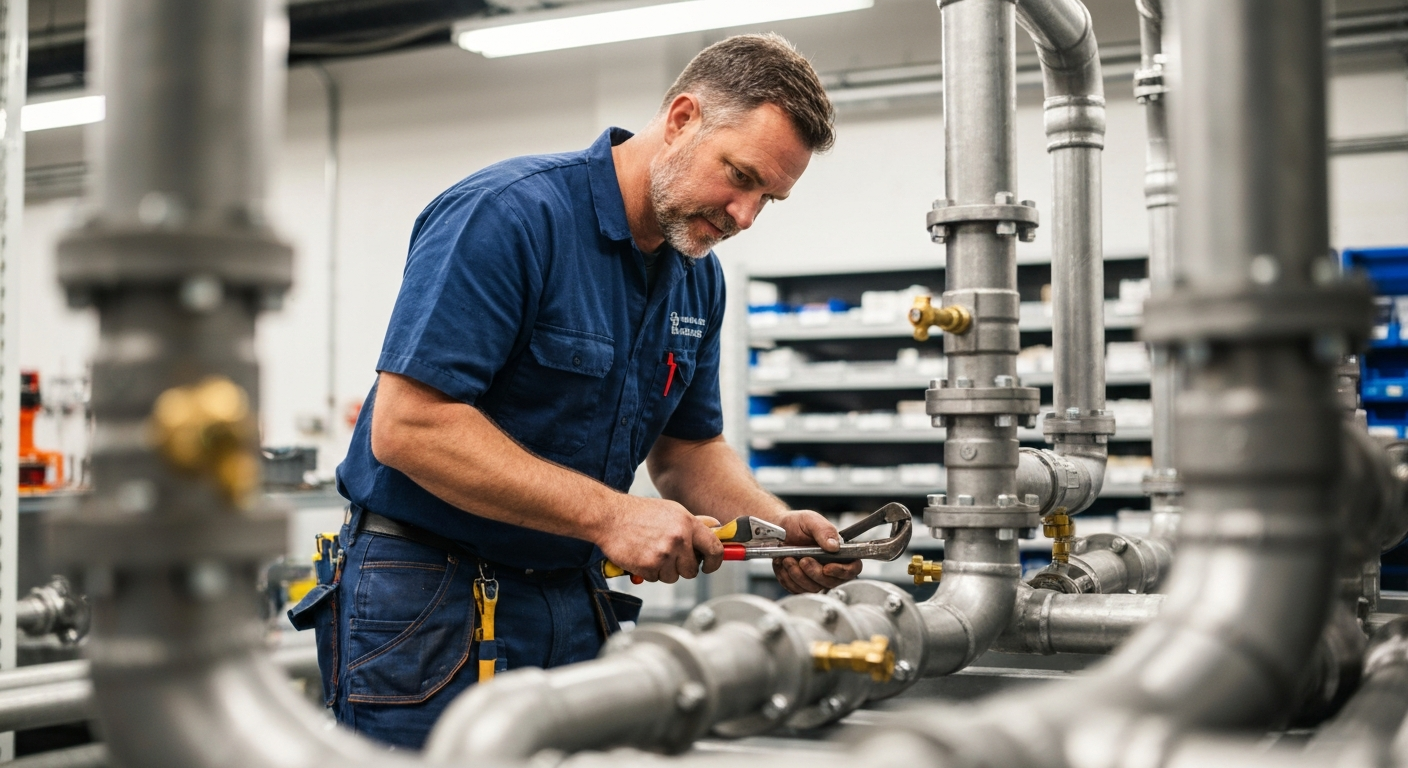
A plumber’s day is rarely the same twice. On a commercial job site, you might spend the morning interpreting blueprints and running hundreds of feet of copper or PEX piping before the walls are closed up. You’ll be measuring, cutting, threading, and soldering pipes, ensuring everything aligns perfectly with building codes and the structural layout. It requires precision, math skills, and the physical stamina to work overhead or in awkward positions for hours.
On the residential or service side, your day might involve diagnosing a complex pressure issue, repairing a broken water main, or installing high-efficiency water heaters. You’ll interact directly with homeowners or facility managers, troubleshoot problems on the fly, and often work in tight crawl spaces or basements. Whether it's new construction or emergency repairs, the work is highly tactile and directly impacts the health and safety of the building's occupants.
The Career Ladder
How to Get Started
- Check State Requirements: Research your specific state's plumbing board to understand the exact hours and exams needed for licensing.
- Get the Basics: Earn your high school diploma or GED, and brush up on basic algebra and geometry—you'll need them for pipe measurements and angles.
- Choose Your Path: Decide between applying directly to a union apprenticeship, a non-union apprenticeship, or starting at a trade school.
- Apply and Enter Training: Submit applications, pass any required aptitude tests, and begin your formal training. Visit Apprenticeship.gov or our Trade School Directory to find programs.
- Work as a Helper (Optional): If you're waiting for an apprenticeship spot, get a job as a plumbing helper to gain immediate site experience.
- Complete Apprenticeship and License: Finish your 4-5 years of on-the-job training and classroom hours, then pass the Journeyman exam to become fully licensed.
Union vs. Non-Union
| Union (e.g., United Association) | Non-Union (Merit Shop) |
|---|---|
| Highly structured apprenticeship with standardized curriculum and scheduled raises. | Training structure varies by employer; often sponsored through associations like PHCC or ABC. |
| Wages are collectively bargained and set by local contracts. | Wages are negotiated individually and depend on the employer and your performance. |
| Benefits typically include robust pension, health insurance, and annuity funds. | Benefits vary widely; may include 401(k) matching and health insurance, or may be limited. |
| Job placement is handled through the union hall (the "bench"). | You apply for jobs directly with contractors and manage your own employment transitions. |
| Mobility can be restricted by local jurisdiction rules, though traveling as a "boomer" is possible. | Free to move and work anywhere, though you must secure your own employment. |
Apprenticeship
Wages
Benefits
Job Placement
Mobility
Total compensation includes pension, health, annuity, and union dues—not just the hourly wage. Always compare the full package directly rather than assuming one is better.
Tools & Safety Gear
Starter Toolkit
- Tape measure (25ft)
- Torpedo level
- Channel locks (tongue-and-groove pliers)
- Multi-bit screwdriver
- Utility knife
- Pipe wrench (small/medium)
Safety Gear
- Steel or composite toe work boots
- Safety glasses
- Work gloves (cut-resistant and standard)
- Hard hat (for commercial sites)
- Knee pads
Note: Gear links may be affiliate links, disclosure applies. We only recommend what we'd tell a real apprentice to buy. View our Tools & Gear hub, filtered for Plumbing.
Training & Schools
You can start a plumbing career through a direct apprenticeship or by attending a trade school first. An apprenticeship allows you to earn a paycheck while learning on the job, whereas a trade school program can provide foundational knowledge that makes you a more competitive apprentice candidate. Check out our Trade School Directory, filtered for Plumbing and our Apprenticeships & Training hub to weigh your options.
Women in the Trades
Plumbing is seeing a growing number of women entering the field, driven by excellent pay and clear career progression. Organizations and local union chapters often have dedicated mentorship programs and support networks to help women navigate and succeed in this trade. Learn more at our Women in the Trades hub.
Pros & Cons
Pros
- High demand and excellent job security
- Clear pathway to owning your own business
- Work cannot be outsourced or automated
- Strong earning potential, especially with overtime or emergency calls
Cons
- Physically demanding on knees, back, and shoulders
- Exposure to raw sewage and hazardous materials
- Emergency service calls can mean working nights, weekends, or holidays
- Working in cramped, hot, or uncomfortable spaces
Related Trades
If plumbing interests you, also consider: Pipefitter/Steamfitter, HVAC/R Technician, Sprinklerfitter, Solar Installer, or Electrician.
Safety Disclaimer
GetInTheTrades.com is an informational career resource. Plumbing work can be dangerous and may require licensing, permits, code compliance, and supervised training. Do not attempt professional plumbing work without proper instruction, safety equipment, and licensed supervision where required.
Sources
- Bureau of Labor Statistics, U.S. Department of Labor, Occupational Outlook Handbook, Plumbers, Pipefitters, and Steamfitters (May 2024 data, accessed July 4, 2026).
- Bureau of Labor Statistics, U.S. Department of Labor, Occupational Employment and Wage Statistics (OEWS), May 2025 release, published May 15, 2026.