
Electrician
Power the modern world by installing, maintaining, and repairing electrical systems in homes, businesses, and factories.
Quick Facts
| Metric | Details |
|---|---|
| Median Annual Wage | $62,350* |
| Median Hourly Wage | $34.37* |
| Projected Growth (2024–2034) | 9%* |
| Projected Annual Openings | ~81,000/year* |
| Typical Entry Path | Apprenticeship (4-5 years) |
| Physical Demands | Standing for long periods, kneeling, lifting heavy components, working in tight spaces |
*Source: BLS Occupational Outlook Handbook and OEWS (accessed July 2026).
Find Trade Info in Your State →Day in the Life
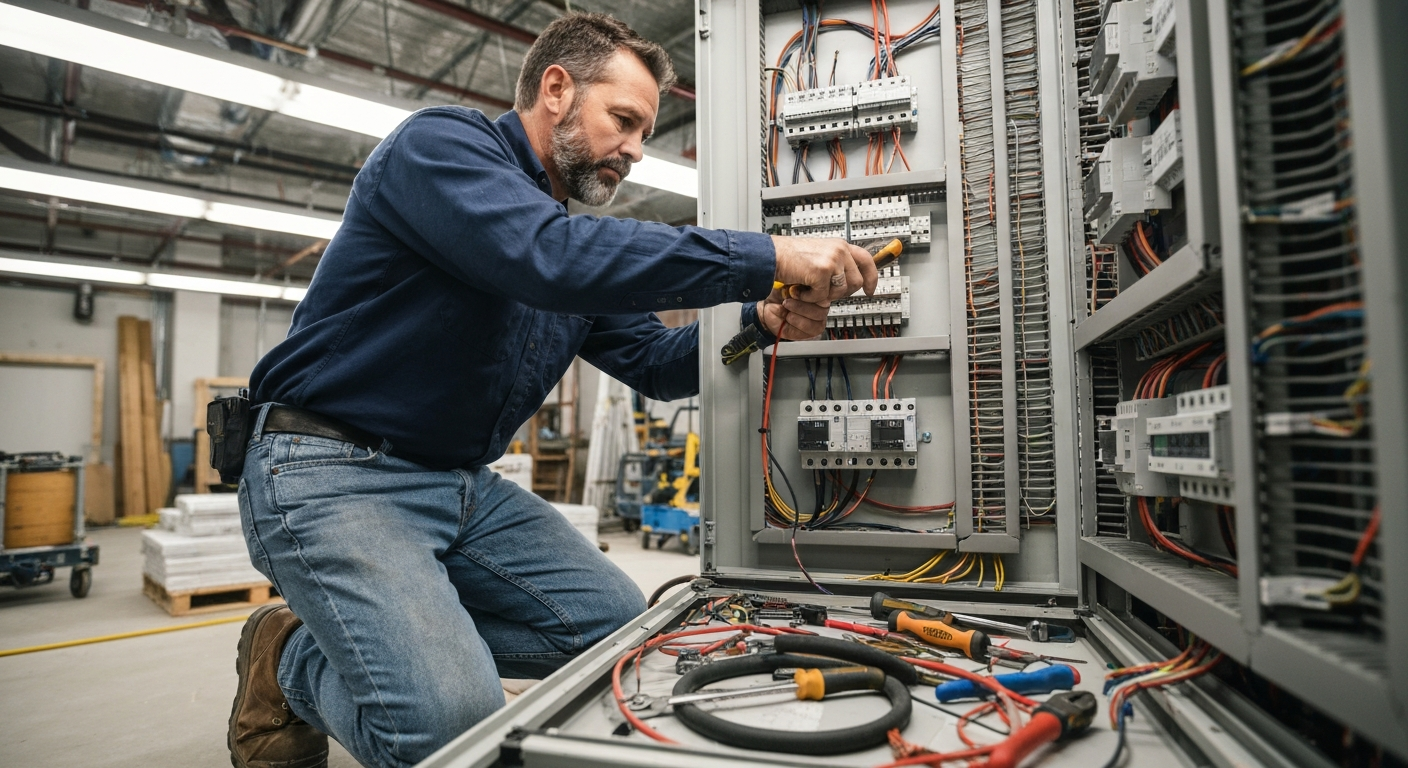
An electrician's daily routine depends heavily on their specialization. Inside wiremen typically spend their days on construction sites or in commercial buildings, pulling wire through conduit, installing breaker panels, and terminating connections. The work requires precision and a thorough understanding of blueprints and the National Electrical Code. You might start the morning reviewing schematics with a foreman, spend the mid-day troubleshooting a complex circuit issue, and finish by testing newly installed systems to ensure they operate safely.
Residential electricians often move between multiple job sites in a single day. Tasks range from upgrading an older home's electrical panel to handle modern loads, to wiring new custom homes from the ground up. Service calls involve diagnosing why a circuit keeps tripping or repairing faulty outlets. Regardless of the setting, the job demands constant attention to safety protocols, as working with live electricity leaves zero room for careless mistakes.
A growing specialization within electrical work involves building out data centers and EV charging infrastructure. Driven by the rapid expansion of AI, cloud computing, and electric vehicle adoption, this sector requires installing massive power systems and specialized equipment. It offers a distinct career path for electricians looking to focus on emerging technologies, often with strong compensation reflecting the technical demands of the work.
The Career Ladder
Pre-apprentice / Helper
Entry-level role focused on material handling, site cleanup, and basic tasks while preparing for formal apprenticeship entry.
Apprentice
A 4-5 year period combining paid on-the-job training (typically 8,000+ hours) with classroom instruction.
Journeyman / licensed tradesperson
Achieved after completing the apprenticeship and passing a state or local licensing exam. (State licensing requirements vary widely).
Master
An advanced certification requiring additional years of experience and passing a rigorous exam. (Note: A master tier is not available in every state).
Foreman / Lead
Supervises crews, manages materials, and coordinates with other trades on job sites.
Project Manager / Superintendent / own business
Oversees entire projects from bidding to completion, or operates an independent electrical contracting company.
How to Get Started
- Research local requirements: Electrical licensing is often regulated at the state or county level. Understand what is required in your specific area.
- Earn a high school diploma or GED: A solid foundation in algebra is critical for passing apprenticeship aptitude tests and understanding electrical theory.
- Choose a training path: Decide between applying directly to a union or non-union apprenticeship, or attending a trade school first to build foundational skills.
- Apply for apprenticeships: Submit applications to local programs. This often involves an aptitude test covering reading comprehension and math, followed by an interview.
- Complete the apprenticeship: Work full-time under the supervision of journeymen while attending classes (often at night or one day a week) for 4-5 years.
- Pass the licensing exam: After accumulating the required on-the-job hours and classroom instruction, take the exam to become a licensed journeyman.
Explore programs via Apprenticeship.gov and our Trade School Directory.
Union vs. Non-Union
| Union (IBEW) | Non-Union (Merit Shop) |
|---|---|
| Apprenticeship: Highly structured through the Electrical Training Alliance (JATC). Very competitive entry. | Apprenticeship: Managed by employer associations (like IEC or ABC) or individual companies. Can be faster to enter. |
| Wages: Standardized pay scales negotiated by collective bargaining. Rates are transparent and uniform for the local area. | Wages: Negotiated individually based on experience, performance, and company policy. |
| Benefits: Typically robust, employer-paid health insurance and multiple pension/retirement funds. | Benefits: Varies by employer. May include 401(k) matches and health insurance, but workers often contribute to premiums. |
| Job Placement: The union hall dispatches workers to contractors. When a job ends, you return to the books for the next assignment. | Job Placement: You are hired directly by a contractor. Employment stability depends on that specific company's backlog of work. |
| Mobility: Easier to travel and work in different jurisdictions using the union ticket system. | Mobility: Tied to your specific employer or requires applying to new companies if you move. |
Apprenticeship
Wages
Benefits
Job Placement
Mobility
Total compensation includes pension, health, annuity, and dues, not just the hourly wage. Compare total packages directly rather than assuming one is always better.
Tools & Safety Gear
Starter Toolkit (Helper/Pre-apprentice)
- Lineman's pliers (9-inch)
- Wire strippers
- Multi-bit screwdriver
- Tape measure (25-foot)
- Non-contact voltage tester
- Tool pouch or sturdy bag
Required Safety Gear
- EH-rated (Electrical Hazard) work boots
- Safety glasses (clear and tinted)
- Hard hat
- Insulated gloves (when required for specific tasks)
Gear links may be affiliate links, disclosure applies, we only recommend what we'd tell a real apprentice to buy. See the Tools & Gear hub, filtered for Electrician.
Training & Schools
An apprenticeship is the primary and preferred method for becoming a licensed electrician, as it provides a direct path to the required on-the-job hours while you earn a paycheck. However, some individuals choose to attend a technical or trade school first to learn basic theory, which can make them more competitive when applying for apprenticeships. Trade school graduates still need to complete an apprenticeship to earn their license, though some programs may credit classroom hours.
Check the Trade School Directory, filtered for Electrician and the Apprenticeships & Training hub.
Women in the Trades
While the electrical trade is historically male-dominated, a growing number of women are entering the field as inside wiremen, low-voltage technicians, and project managers. Many local unions and contractor associations actively recruit women and sponsor pre-apprenticeship programs designed to build foundational skills and confidence before formal training begins.
Connect with resources in the Women in the Trades hub.
Pros & Cons
Pros
- High earning potential and strong demand
- Intellectually challenging work involving problem-solving
- Less physically destructive on the body compared to some other trades
- Clear pathways to business ownership or management
Cons
- High risk of severe injury or death if safety protocols are ignored
- Requires strong math skills and continuous studying for code updates
- Work environments can be extreme (unheated buildings in winter, hot attics in summer)
- Apprenticeship is long and highly competitive to enter
Related Trades
Consider exploring these related fields: Solar Installer, Elevator Install/Repair, HVAC/R Technician, Electrical Power-Line Installer/Repairer, or Low-Voltage/Systems Technician.
Safety Disclaimer
GetInTheTrades.com is an informational career resource. Electrician work can be dangerous and may require licensing, permits, code compliance, and supervised training. Do not attempt professional electrician work without proper instruction, safety equipment, and licensed supervision where required.
Sources
- Bureau of Labor Statistics, U.S. Department of Labor, Occupational Outlook Handbook, Electricians. Median annual wage and projected growth (2024–2034). May 2024 data, accessed July 4, 2026.
- Bureau of Labor Statistics, U.S. Department of Labor, Occupational Employment and Wage Statistics (OEWS). Median hourly and mean annual wage. May 2025 release, published May 15, 2026.