Solar Installer
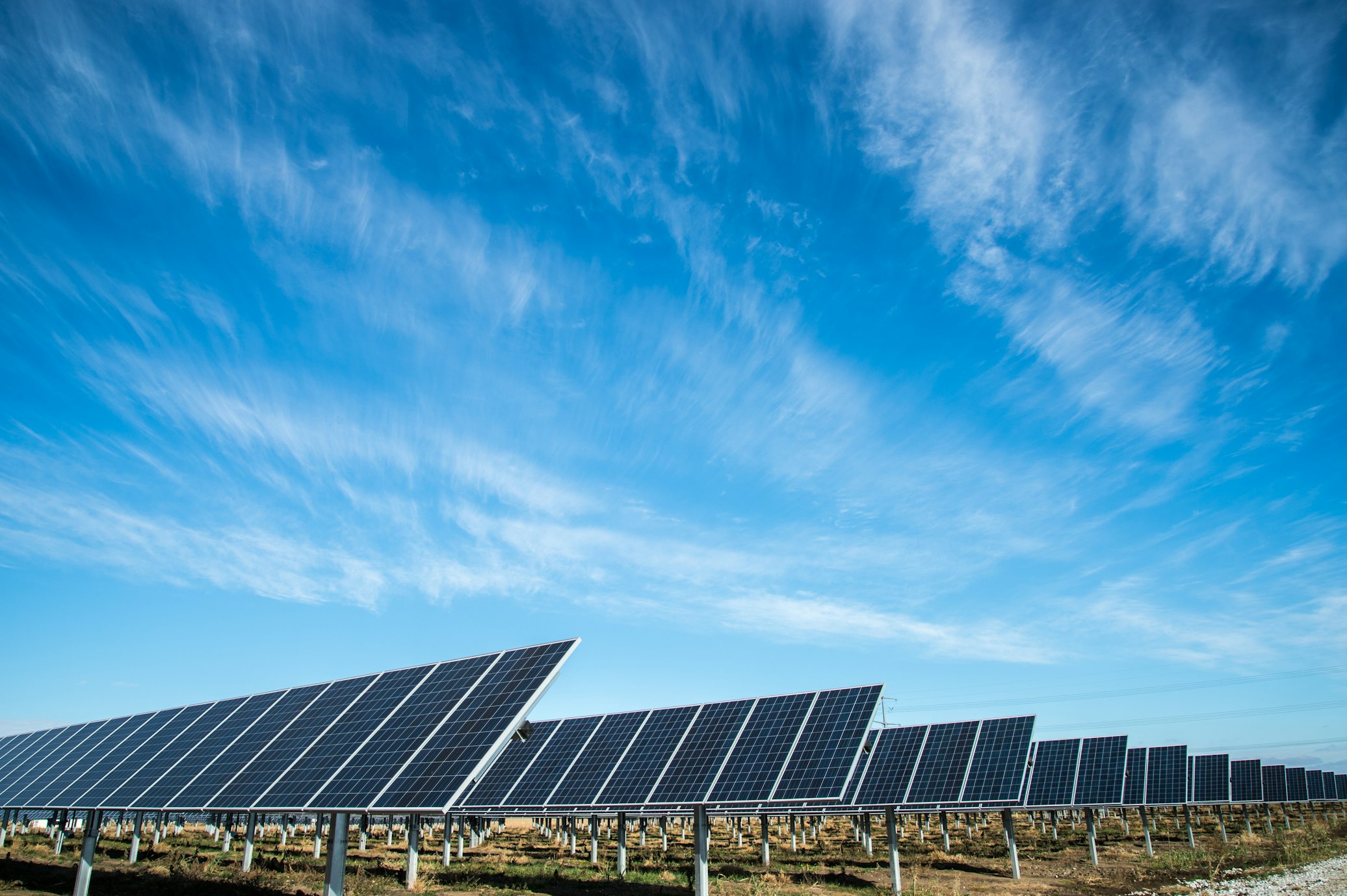
Build the future of energy by mounting, wiring, and maintaining solar arrays on homes and commercial sites.
Quick Facts
| Median Annual Wage | $51,860 |
|---|---|
| Median Hourly Wage | $24.93 |
| Projected Job Growth | 42% (2024–2034) — Second-fastest growing occupation in the US |
| Projected Annual Openings | ~4,100/year* |
| Typical Entry Path | Trade/technical school followed by on-the-job training |
| Physical Demands | Heavy lifting, working at heights, extreme weather exposure |
*Note: While solar installation has the highest growth percentage of any trade, the total workforce is smaller than trades like electrical or plumbing, meaning the raw number of annual openings is lower. Source: BLS Occupational Outlook Handbook, May 2024 data, accessed July 5, 2026.
Find Trade Info in Your StateDay in the Life
A solar installer's day typically starts early to beat the heat, loading materials and reviewing the site plan before heading to a residential or commercial job site. The core work involves measuring and mapping out the roof or ground area, installing the structural racking systems that hold the panels, and securely mounting the photovoltaic (PV) modules themselves. You'll spend a significant amount of time on ladders, steep pitched roofs, or operating lifts, exposed to the sun and elements for most of your shift.
Beyond the heavy lifting and mounting, the job requires precision in running DC wiring from the panels down to the inverter location. While licensed electricians usually handle the final connections to the main electrical panel and the grid, solar installers must understand basic electrical safety, wire management, and how to test the system's output to ensure everything is functioning correctly before the final inspection.
The Career Ladder
Pre-apprentice / Helper
Entry-level role focused on staging materials, assembling racking, and learning site safety. Often requires no prior experience.
Apprentice / Installer
Usually involves 1-2 years of on-the-job training. You'll mount panels, run wiring, and prepare for industry certifications like NABCEP.
Journeyman / Lead Installer
Achieved through experience and certification (e.g., NABCEP PV Installation Professional). Note: Most states do not issue a formal 'Journeyman Solar Installer' license; this title reflects industry expertise and leadership on the roof.
Master
There is no formal state 'Master' tier for solar installation. Advanced installers may pursue specialized electrical licensing or higher-level NABCEP technical certifications.
Foreman / Crew Lead
Manages a team of installers on-site, coordinates with electricians and inspectors, and ensures the project is completed safely and to code.
Project Manager / Superintendent / Own Business
Oversees multiple job sites, handles permitting and logistics, or runs an independent solar installation company.
Want to know what each step pays near you? Check the state pay tool.
How to Get Started
- Check state requirements: Understand if your state requires any specific construction or electrical trainee registration to work on a roof or handle PV wiring.
- Get comfortable with heights: Solar installation requires working on pitched roofs and climbing ladders daily. Make sure you are physically capable and comfortable with this environment.
- Apply for entry-level jobs or training: Look for "solar helper" or "roofer" positions at local solar companies, or enroll in a short-term trade school program focused on renewable energy.
- Learn basic electrical concepts: While you may not be a licensed electrician, understanding voltage, current, and DC wiring is crucial for safety and advancement.
- Log your hours: Keep track of your on-the-job training hours, as these are required when applying for advanced industry certifications.
- Earn your NABCEP certification: Study for and pass the North American Board of Certified Energy Practitioners (NABCEP) exam to prove your professional competence and increase your earning potential.
Find programs on Apprenticeship.gov or search the Trade School Directory.
Union vs. Non-Union
A large share of residential and commercial solar installation work is non-union. However, utility-scale solar farms and projects requiring extensive electrical integration often involve union workers, particularly through the IBEW.
Training Structure
Union:
Formal, multi-year electrical apprenticeship with specific solar modules.
Non-Union:
Often faster entry; training is employer-led or via trade schools.
Wages
Union:
Standardized scale based on classification; generally higher hourly rate.
Non-Union:
Negotiated individually; varies widely by company and region.
Benefits
Union:
Comprehensive pension and family health insurance paid by employer contributions.
Non-Union:
Varies; larger companies offer 401(k) and health plans, smaller ones may not.
Job Placement
Union:
Dispatched through the union hall to contractors.
Non-Union:
You find, apply for, and secure jobs directly with employers.
Mobility
Union:
Can travel and work in other jurisdictions with union ticket.
Non-Union:
Can switch companies freely; NABCEP certification transfers everywhere.
| Factor | Union (e.g., IBEW) | Non-Union (Open Shop) |
|---|---|---|
| Training Structure | Formal, multi-year electrical apprenticeship with specific solar modules. | Often faster entry; training is employer-led or via trade schools. |
| Wages | Standardized scale based on classification; generally higher hourly rate. | Negotiated individually; varies widely by company and region. |
| Benefits | Comprehensive pension and family health insurance paid by employer contributions. | Varies; larger companies offer 401(k) and health plans, smaller ones may not. |
| Job Placement | Dispatched through the union hall to contractors. | You find, apply for, and secure jobs directly with employers. |
| Mobility | Can travel and work in other jurisdictions with union ticket. | Can switch companies freely; NABCEP certification transfers everywhere. |
When comparing offers, remember that total compensation includes pensions, health insurance, annuity contributions, and dues where applicable — not just the hourly wage. Compare the full package directly.
Tools & Safety Gear
Starter Toolkit
- Impact driver and cordless drill
- Basic hand tools (socket set, screwdrivers, pliers)
- Wire strippers and crimpers
- Tape measure and chalk line
- Tool belt or pouch
Required Safety Gear
- Fall protection harness and lanyard
- Non-slip, electrical-hazard (EH) rated work boots
- Hard hat and safety glasses
- Cut-resistant work gloves
- Sun protection (long sleeves, neck shades)
Gear links may be affiliate links, disclosure applies, we only recommend what we'd tell a real apprentice to buy. See the Tools & Gear hub, filtered for Solar Installation.
Training & Schools
Because formal state apprenticeships for solar installers are rare, many begin by completing a short-term certificate program at a technical or community college. These programs teach the basics of PV systems, safety, and electrical theory, preparing you for entry-level work and setting the foundation to earn the industry-standard NABCEP certification after gaining on-the-job experience.
Check the Trade School Directory, filtered for Solar Installation and the Apprenticeships & Training hub for programs near you.
Women in the Trades
The renewable energy sector is actively working to diversify its workforce, and solar installation offers a rapidly growing pathway with strong demand for skilled workers regardless of gender. Organizations and pre-apprenticeship programs are increasingly focused on helping women enter green energy careers. Learn more about support networks, gear, and what to expect on the Women in the Trades hub.
Pros & Cons
Pros
- Massive job growth and industry expansion
- Faster entry compared to traditional 4-5 year apprenticeships
- Work outdoors and contribute to renewable energy
- Clear path to transition into electrical work if desired
Cons
- Physically demanding: heavy lifting on steep roofs
- Exposure to extreme weather (heat, cold, sun)
- Lower median wage than established trades like electrical or plumbing
- Work can be seasonal in some climates
Safety Disclaimer
GetInTheTrades.com is an informational career resource. Solar installation work can be dangerous and may require licensing, permits, code compliance, and supervised training. Do not attempt professional solar installation work without proper instruction, safety equipment, and licensed supervision where required.
Sources
- • Bureau of Labor Statistics, U.S. Department of Labor, Occupational Outlook Handbook, Solar Photovoltaic Installers, May 2024 data, accessed July 5, 2026.
Ready to start?
Find out what solar installers make in your state and learn how to take the first step.
Start Your Path