Welder
Fabricate, join, and repair the metal structures that build our world — from pipelines and skyscrapers to ships and custom machinery.
Quick Facts
| Median Annual Wage | $51,000 (National) / $56,760 (Mean)* |
|---|---|
| Median Hourly Wage | $27.29* |
| Projected Growth | 2% (2024–2034) |
| Annual Openings | ~45,600/year |
| Typical Entry Path | Trade school (6-18 mos) or Apprenticeship (3-4 years) |
| Physical Demands | High: heavy lifting, awkward positions, intense heat, fumes |
*Source: BLS Occupational Outlook Handbook (May 2024 data) and OEWS (May 2025 release). Accessed July 5, 2026.
Find Trade Info in Your State →National averages don't tell the whole story. Use our state tool to see what welders actually make in your area.
Day in the Life
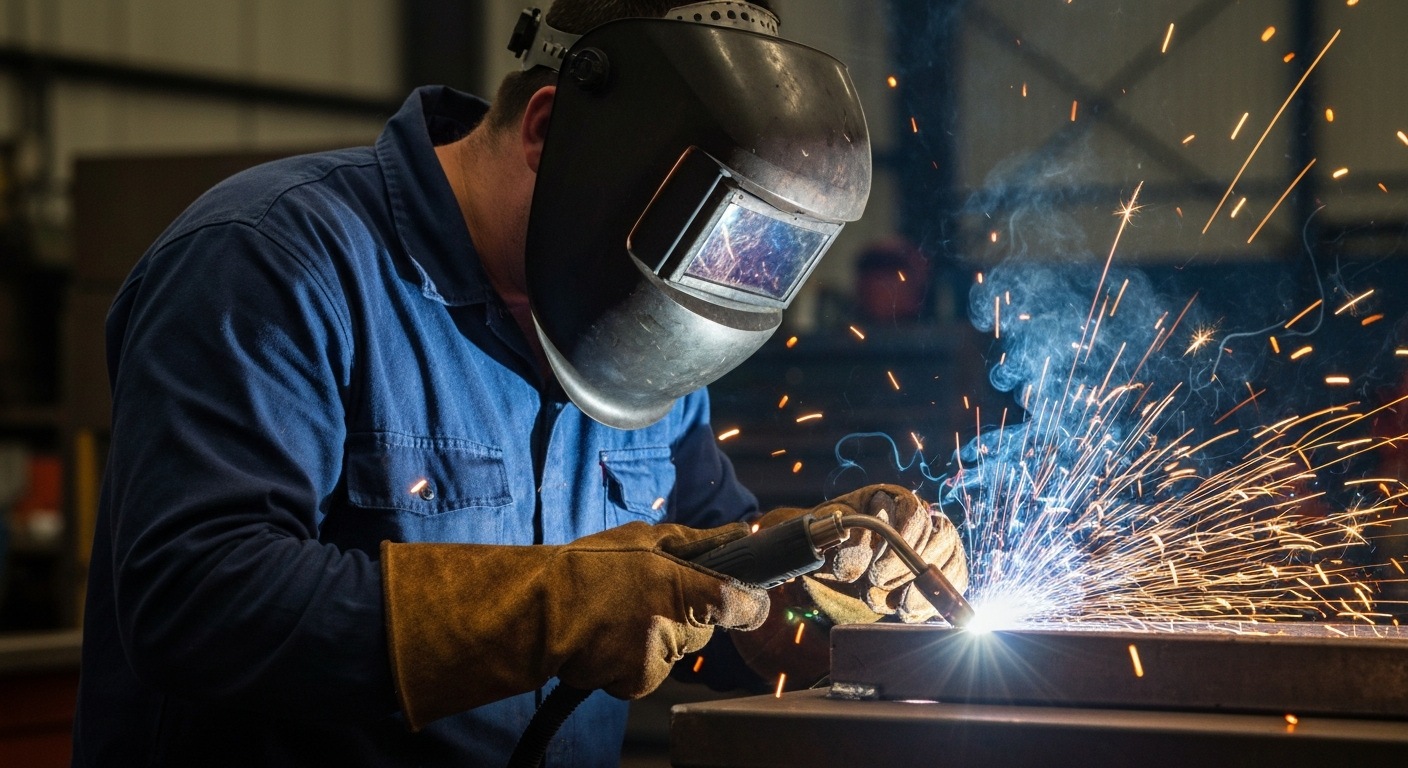
A welder's daily environment depends heavily on their specific industry. In a fabrication shop, the day might start at 6:00 AM, working from blueprints to cut, fit, and weld custom metal components like structural beams or heavy machinery parts. This setting offers a predictable indoor routine, usually utilizing MIG or TIG welding processes at a dedicated workbench, focusing heavily on precision and consistency.
Out in the field—whether on a commercial construction site, an oil pipeline, or a shipyard—the work is much more dynamic and physically demanding. Field welders often work out of a rig truck, dragging heavy leads, climbing scaffolding, and welding in tight, awkward positions. They battle the elements, wear heavy protective gear including leathers and respirators, and frequently rely on Stick welding to join thick materials outdoors. Regardless of the setting, the core of the job is intense focus, reading the puddle, and laying down strong, clean welds that pass strict safety inspections.
The Career Ladder
1. Pre-apprentice / Helper
Starting out by grinding, cleaning metal, moving materials, and learning the basics of shop or site safety.
2. Apprentice / Trainee
Trade school programs run 6-18 months. Union apprenticeships (Boilermakers, Ironworkers) typically run 3-4 years combining OJT and classroom hours.
3. Certified Welder / Journeyman
Earning specific AWS certifications (e.g., 3G, 4G, 6G) for different processes (MIG, TIG, Stick). Journeyman status applies if in a union.
4. Master
Note: Welding does not use a formal state 'Master' license tier like plumbing or electrical. Advancement is based on certifications and skill.
5. Foreman / Lead
Running a crew, overseeing site safety, managing materials, and ensuring quality control on welds.
6. Project Manager / Superintendent / Own Business
Transitioning off the tools to inspect others' work (CWI), managing projects, or running an independent fabrication rig.
Want to know what each of these stages pays locally? Check the state tool instead of guessing.
How to Get Started
Research the primary welding processes (MIG, TIG, Stick) and decide if you prefer shop fabrication or field construction work.
Check your state and local requirements. While welding doesn't typically require a state-issued occupational license, employers usually require specific AWS process certifications.
Choose your training path: enroll in a local trade/technical school program (fastest route to basic skills) or apply for a union apprenticeship (earn while you learn).
Invest in your basic personal protective equipment (PPE), including a quality auto-darkening hood, safety glasses, and welding gloves.
Complete your training hours, pass your AWS certification tests (e.g., 3G, 4G structural plates), and build a solid portfolio of clean welds.
Apply for helper, apprentice, or entry-level welder positions to begin racking up real-world experience and working toward advanced pipe or aerospace certifications.
Union vs. Non-Union
| Factor | Union (e.g., Boilermakers, Ironworkers) | Non-Union (Private Shops/Contractors) |
|---|---|---|
| Apprenticeship | Highly structured, 3-4 years, standardized curriculum, earn while you learn. | Varies. Often requires completing trade school first, then on-the-job training. |
| Wages | Set by collective bargaining agreement. Usually higher hourly base. | Negotiated individually based on skill, speed, and specific certifications. |
| Benefits | Robust pension, family health insurance, annuity (paid by contractor). | Varies widely by employer; 401(k) match and partial health coverage common. |
| Job Placement | Dispatched from the union hall based on the "out of work" list. | You must find, apply, and interview for your own jobs. |
| Mobility | Can travel ("boom out") to other union locals across the country for big jobs. | Can work anywhere, but must negotiate pay and prove skills to each new employer. |
Apprenticeship
Wages
Benefits
Job Placement
Mobility
Note: Total compensation includes pension, healthcare, annuity, and union dues—not just the hourly wage. Always compare the full package directly.
Tools & Safety Gear
Starter Toolkit
- Wire brushes (carbon and stainless)
- Chipping hammer
- 4.5" angle grinder
- Welder's pliers (MIG pliers)
- Tape measure and soapstone
- Vise grips and C-clamps
Required Safety Gear
- Auto-darkening welding hood
- Heavy leather welding gloves (Stick/MIG) and thin TIG gloves
- FR (Flame Resistant) cotton jacket or leathers
- Half-mask respirator (P100 filters)
- Steel-toe or composite-toe leather boots
- Clear safety glasses and ear protection
Gear links may be affiliate links (disclosure applies). We only recommend what we'd tell a real apprentice to buy. See the Tools & Gear hub, filtered for Welding.
Training & Schools
For welding, trade schools are a highly popular and effective route, offering concentrated 6-to-18-month programs that get you certified and employable quickly. Alternatively, union apprenticeships (like the Boilermakers or Ironworkers) take longer (3-4 years) but pay you to learn on the job while covering your classroom instruction costs.
Search the Trade School Directory (filtered for Welding) or explore the Apprenticeships & Training hub.
Women in the Trades
Welding is increasingly popular among women entering the trades, as the work heavily rewards steady hands, attention to detail, and precision over sheer brute strength (especially in TIG welding and aerospace fabrication). Organizations like Women Who Weld provide dedicated training, networking, and advocacy to help women succeed in the field.
Learn more at the Women in the Trades hub.
Pros & Cons
Pros
- • Fast entry into the workforce compared to other trades
- • Skills are highly transferable across industries (construction, auto, aerospace)
- • Opportunity to travel the country for high-paying shutdown/turnaround jobs
- • Gratifying, visible results (laying a perfect bead)
Cons
- • Exposure to intense heat, UV light, sparks, and toxic fumes
- • Physically demanding, often requiring awkward positioning for hours
- • High risk of burns and eye damage if safety gear isn't perfect
- • Income can be heavily dependent on willingness to travel
Safety Disclaimer
GetInTheTrades.com is an informational career resource. Welding work can be dangerous and may require licensing, permits, code compliance, and supervised training. Do not attempt professional welding work without proper instruction, safety equipment, and licensed supervision where required.
Sources
- • Bureau of Labor Statistics, U.S. Department of Labor, Occupational Outlook Handbook, Welders, Cutters, Solderers, and Brazers. May 2024 data. Accessed July 5, 2026.
- • Bureau of Labor Statistics, U.S. Department of Labor, Occupational Employment and Wage Statistics (OEWS) May 2025 release. Published May 15, 2026.
Ready to strike an arc?
Take the next step toward a career in welding. Find programs, compare pay, and learn how to get started.
Start Your Path