Sheet Metal Worker
Shape, fabricate, and install the metal systems that manage air, water, and architectural design in modern buildings.
Quick Facts
| Metric | Details |
|---|---|
| Median Annual Wage | $60,850* |
| Median Hourly Wage | $32.62* |
| Projected Growth (2024–2034) | 2%* |
| Projected Annual Openings | ~10,600/year* |
| Typical Entry Path | 4-5 year apprenticeship or trade school |
| Physical Demands | High (lifting, standing, working at heights, bending) |
*Source: BLS Occupational Outlook Handbook and OEWS May 2025 release (accessed July 2026).
Find Trade Info in Your State →Day in the Life
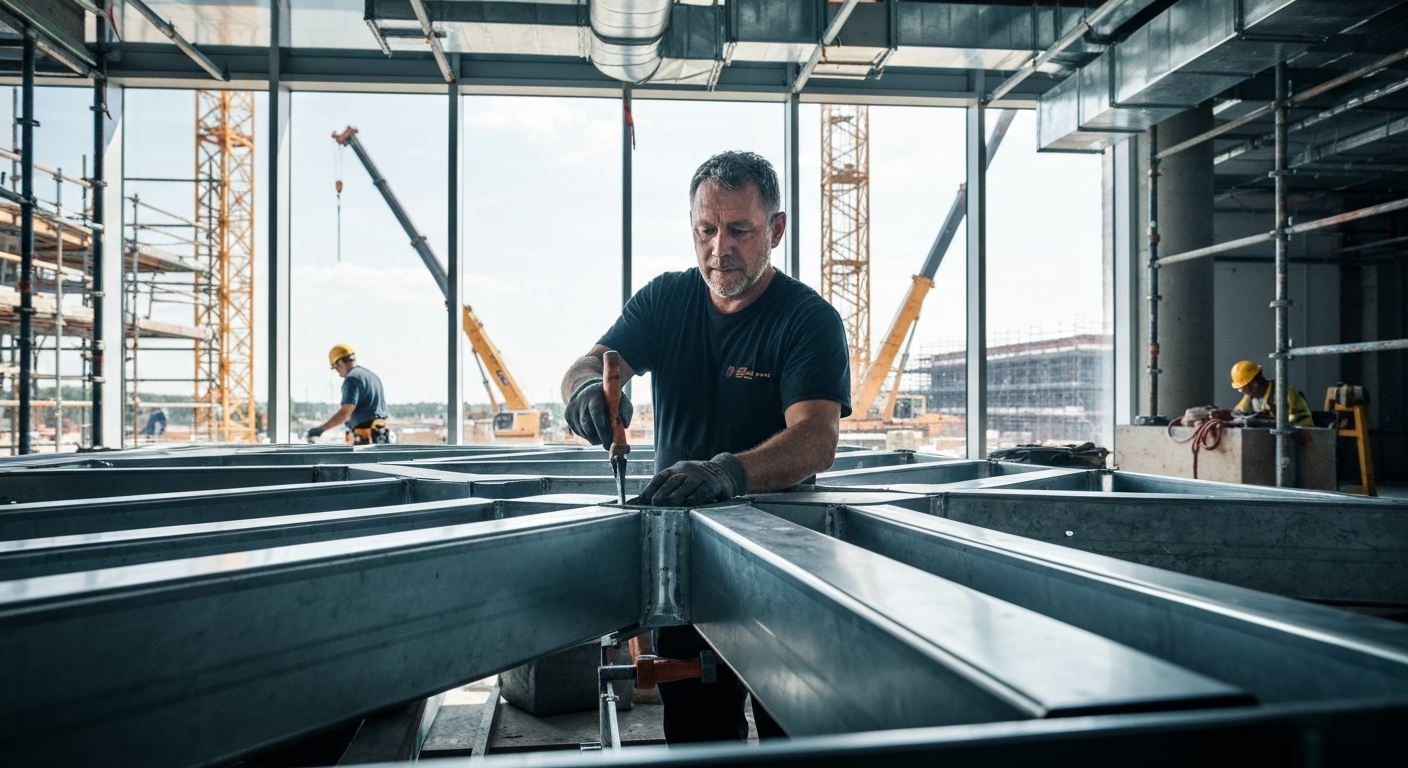
Sheet metal work is unique because it often involves manufacturing the product before installing it. A day might start in the shop, reading blueprints and CAD drawings to lay out, cut, and form massive pieces of galvanized steel, aluminum, or copper using shears, press brakes, and plasma cutters. You are literally building the puzzle pieces that will become a building's HVAC ductwork system, custom architectural metal, or commercial roofing.
The other half of the trade happens in the field. You'll transport those fabricated pieces to the construction site and install them. This involves working on ladders, scaffolding, or scissor lifts to hoist heavy ductwork into ceilings, drill anchors, and seal joints. It is a highly precise trade where a quarter-inch mistake in the shop means the pieces won't fit together on the job site.
The Career Ladder
Pre-apprentice / Helper
Entry-level role focusing on moving materials, organizing the shop, assisting journeymen with installations, and learning basic tool handling.
Apprentice (4-5 years)
A structured period of paid on-the-job training mixed with classroom instruction covering blueprint reading, drafting, welding, and advanced fabrication.
Journeyman / Skilled Tradesperson
Fully qualified to fabricate and install complex systems independently. (Note: Sheet metal work generally does not use a state-issued journeyman license, though local HVAC overlap may require specific permits).
Master
There is no formal state master tier in sheet metal work. Advancement comes through specialized certifications (like welding, TAB - Testing, Adjusting, and Balancing) and leadership experience.
Foreman / Lead
Manages a crew of installers or shop fabricators, coordinates with other trades on the job site, and ensures projects meet specifications and timelines.
Project Manager / Superintendent / Own Business
Oversees multiple large-scale projects, handles estimating and bidding, or opens an independent sheet metal fabrication and installation contracting business.
How to Get Started
- Check requirements: Most apprenticeships require you to be 18, have a high school diploma or GED, pass a drug test, and hold a valid driver's license.
- Brush up on math: Sheet metal relies heavily on geometry and fractions for layout and fabrication. Be prepared for a math aptitude test during the application process.
- Choose your path: Decide between applying for a union apprenticeship (often through SMART) or finding a non-union shop willing to hire you as a helper to learn on the job.
- Apply and test: Submit your application to the local training center or employer. If going the union route, you will take an aptitude test and complete an interview.
- Enter training: Begin working as an apprentice or helper, earning a paycheck while learning the trade both in the shop and out in the field.
- Complete the apprenticeship: Finish your required on-the-job hours and classroom instruction to reach journeyman status.
Union vs. Non-Union
Apprenticeship
Wages
Benefits
Job Placement
Mobility
| Factor | Union (SMART) | Non-Union (Open Shop) |
|---|---|---|
| Apprenticeship | Highly structured 4-5 year program with standardized curriculum. | Varies by employer; may involve trade school or informal on-the-job training. |
| Wages | Standardized scale based on experience tier, negotiated collectively. | Negotiated individually; often lower starting, but varies by shop. |
| Benefits | Strong pension and health insurance packages included. | Depends entirely on the employer; may include 401(k) and health plans. |
| Job Placement | Dispatched through the union hall to signatory contractors. | You must find, apply, and interview for jobs yourself. |
| Mobility | Can travel as a journeyman to work out of other union locals. | Tied to your specific employer or local job market. |
When comparing offers, remember that total compensation includes pension, health insurance, annuity, and dues—not just the hourly rate on your paycheck. Compare the full package directly.
Tools & Safety Gear
Starter Toolkit
- Tape measure (25ft)
- Aviation snips (left, right, and straight cut)
- Hand seamers and folding tools
- Scratch awl and markers
- Sheet metal hammer
- Basic screwdrivers and pliers
- Tool pouch or bag
Required Safety Gear
- Cut-resistant gloves (essential for sharp metal edges)
- Safety glasses
- Steel or composite toe work boots
- Hard hat
- Ear protection (shop environments are loud)
- High-visibility clothing
Note: Gear links may be affiliate links, disclosure applies. We only recommend what we'd tell a real apprentice to buy.
Training & Schools
A union apprenticeship is the most common and comprehensive way to train as a sheet metal worker, providing paid on-the-job experience alongside classroom learning. If you choose the non-union route, attending a trade or technical school for a certificate in sheet metal fabrication or HVAC installation can help you land an entry-level job faster, though it will cost tuition upfront.
Women in the Trades
While sheet metal work is currently male-dominated, unions like SMART and various pre-apprenticeship programs are actively working to recruit and support women in the trade. The precision, layout skills, and attention to detail required in fabrication make it a great fit for anyone willing to learn the craft.
Read more in the Women in the Trades hub →Pros & Cons
Pros
- Mix of shop manufacturing and field installation keeps work varied.
- Highly creative trade; you literally build systems from flat sheets of metal.
- Strong union presence provides excellent benefits and structured training.
- Less exposure to the harsh elements if working primarily in a fabrication shop.
Cons
- High risk of cuts and scrapes; sharp metal edges are a constant hazard.
- Shop environments are extremely loud.
- Field installation often requires working at heights or in awkward spaces.
- Slower projected job growth compared to other trades like electrical or plumbing.
Related Trades
If sheet metal work interests you, also check out: HVAC/R Technician, Welder, Ironworker/Structural Steel Worker, Millwright, and Roofer.
Safety Disclaimer
GetInTheTrades.com is an informational career resource. Sheet metal work can be dangerous and may require licensing, permits, code compliance, and supervised training. Do not attempt professional sheet metal work without proper instruction, safety equipment, and licensed supervision where required.
Sources
- Bureau of Labor Statistics, U.S. Department of Labor, Occupational Outlook Handbook, Sheet Metal Workers, May 2024 data (accessed July 5, 2026).
- Bureau of Labor Statistics, U.S. Department of Labor, Occupational Employment and Wage Statistics (OEWS) May 2025 release, published May 15, 2026 (accessed July 5, 2026).