
Diesel Mechanic
Keep the global supply chain moving by diagnosing and repairing the heavy-duty engines that power trucks, buses, and equipment.
Quick Facts
| Metric | Details |
|---|---|
| Median Annual Wage | $60,640* |
| Median Hourly Wage | See state tool* |
| Projected Growth (2024–2034) | 2%* |
| Projected Annual Openings | ~26,500/year* |
| Typical Entry Path | 1-2 year trade school program + on-the-job training |
| Physical Demands | High (lifting heavy parts, working in awkward positions, standing) |
*Source: BLS Occupational Outlook Handbook (accessed July 2026).
Find Trade Info in Your State →Day in the Life
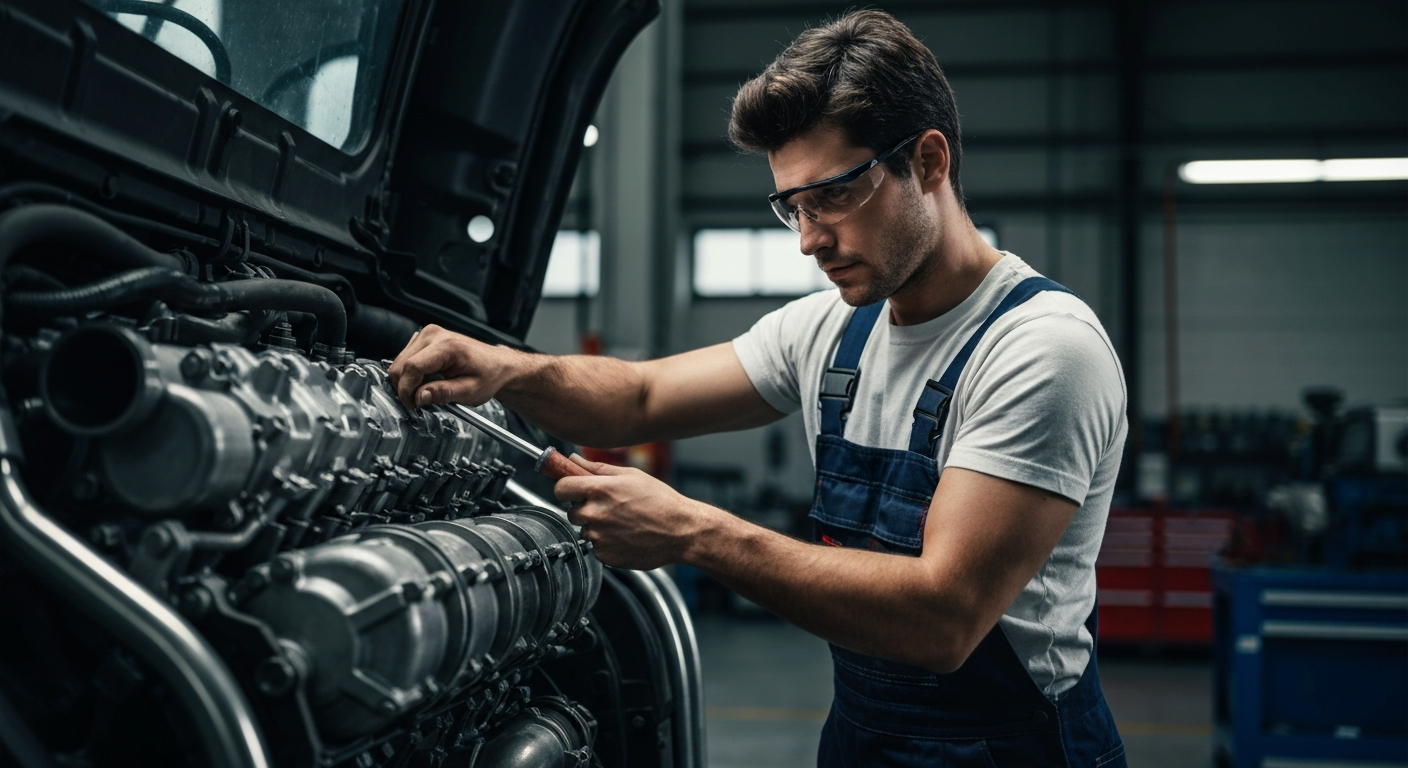
A diesel mechanic's day revolves around diagnosing and repairing the massive engines that power commercial transport and heavy machinery. Whether working on a fleet of 18-wheelers, city transit buses, or agricultural equipment, you'll start by interpreting diagnostic codes from onboard computer systems. Modern diesel engines are highly computerized, meaning you spend as much time with a laptop as you do with a wrench.
Once the issue is isolated, the physical work begins. You'll use pneumatic tools, hoists, and heavy-duty hand tools to tear down engines, replace fuel injectors, rebuild transmissions, or repair exhaust aftertreatment systems. It's a demanding environment—often loud, dirty, and physically taxing—but incredibly satisfying when a 40-ton machine roars back to life because you knew exactly how to fix it.
The Career Ladder
Pre-apprentice / Helper
Entry-level role handling shop cleanup, moving heavy parts, assisting experienced mechanics, and performing basic preventative maintenance like oil changes and lubrication.
Apprentice / Entry-Level Tech
Typically involves 1-2 years of formal trade school education combined with on-the-job training, learning complex diagnostics, engine teardowns, and electrical systems.
Journeyman / Certified Technician
Fully qualified to perform complex diagnostics and repairs independently. Diesel mechanics do not have a state-issued journeyman license; advancement relies on earning ASE certifications.
Master
There is no formal state master tier. Instead, mechanics achieve "Master" status by passing a specific battery of ASE Medium/Heavy Truck certification exams.
Foreman / Lead
Manages the shop floor, assigns work orders, assists with the most difficult diagnostic challenges, and ensures quality control and safety standards are met.
Service Manager / Fleet Director / Own Business
Oversees the entire service department, manages large corporate fleets, handles customer relations and budgeting, or opens an independent diesel repair facility.
How to Get Started
- Research local programs: Look into community colleges or technical schools offering diesel technology programs, as this is the most common entry point.
- Consider employer sponsorships: Some large dealerships, transit agencies, and trucking companies offer paid training programs for entry-level techs.
- Enroll in training: Complete a 1-2 year certificate or associate degree program to learn the fundamentals of diesel engines, electrical systems, and diagnostics.
- Get an entry-level job: Start working as a helper or entry-level technician to build hands-on experience under experienced mechanics.
- Earn ASE certifications: As you gain experience, study for and pass ASE Medium/Heavy Truck certification exams to prove your expertise and increase your earning potential.
- Pursue Master status: Complete the full battery of required ASE exams to achieve Master Medium/Heavy Vehicle Technician status.
Check out Apprenticeship.gov or our Trade School Directory to explore training options.
Union vs. Non-Union
Unlike the construction trades, diesel mechanics are largely non-union, especially at independent shops and equipment dealerships. However, unions like the Teamsters represent mechanics in specific sectors, such as municipal transit, freight logistics, and large delivery fleets.
Apprenticeship
Wages
Benefits
Job Placement / Mobility
| Union (e.g., Teamsters in transit/freight) | Non-Union (Dealerships / Independent Shops) |
|---|---|
| Structured apprenticeships or training programs negotiated in the contract. | Training is often self-directed via trade school or provided directly by the employer/manufacturer. |
| Wages are set by collective bargaining agreements with clear progression steps. | Wages are negotiated individually and often tied to earning ASE certifications or flat-rate productivity. |
| Benefits typically include strong pension plans and comprehensive employer-paid healthcare. | Benefits vary widely; large dealerships offer good packages, while small shops may offer less. |
| Job placement is tied to the specific employer where the union contract exists. | High mobility to move between shops, dealerships, or start an independent repair business. |
Remember: Total compensation includes pension, health coverage, annuity, and dues where applicable—not just your hourly wage. Compare the full package.
Tools & Safety Gear
Starter Toolkit
- Heavy-duty socket set (standard and metric, up to large sizes)
- Combination wrench set
- Screwdriver set and pry bars
- Pliers (locking, slip-joint, needle-nose)
- Oil filter wrenches and basic diagnostic multimeter
Required Safety Gear
- Steel-toe or composite-toe work boots (slip and oil resistant)
- Safety glasses or goggles
- Mechanic's work gloves and heavy-duty nitrile gloves
- Hearing protection (earplugs or muffs)
- Durable, oil-resistant workwear (coveralls or work pants/shirts)
Note: Gear links may be affiliate links. We only recommend what we'd tell a real apprentice to buy. See our Tools & Gear hub, filtered for Diesel Mechanics.
Training & Schools
Unlike many construction trades where union apprenticeships are the primary entry point, diesel mechanics most commonly start by completing a 1-2 year program at a community college or technical school. These programs provide essential foundational knowledge in diesel technology, electronics, and computerized diagnostics, which employers heavily prefer before hiring entry-level technicians for on-the-job training.
Explore the Trade School Directory, filtered for Diesel Mechanics and our Apprenticeships & Training hub to compare your options.
Women in the Trades
While women currently make up a small percentage of diesel mechanics, the industry is actively seeking to diversify its workforce to combat severe technician shortages. Many large fleets, transit agencies, and equipment dealerships are prioritizing inclusive hiring and offering structured training paths for women entering the field.
Connect with support networks and learn more at our Women in the Trades hub.
Pros & Cons
Pros
- Consistent, year-round work (trucks break down regardless of the economy)
- High demand and massive technician shortage drives competitive pay
- Intellectually challenging mix of computer diagnostics and mechanical repair
- Opportunities to specialize in advanced fields like marine or power generation
Cons
- Physically demanding work handling very heavy, greasy components
- Work environment can be loud, dirty, and exposed to harsh chemicals
- High initial investment required for personal tool sets
- Constant need to study and update skills as engine technology evolves
Related Trades
If diesel mechanics interests you, you might also want to explore: Heavy Equipment Operator, Millwright, Industrial Maintenance Technician, CNC Machinist, or Welder.
Safety Disclaimer
GetInTheTrades.com is an informational career resource. Diesel mechanic work can be dangerous and may require licensing, permits, code compliance, and supervised training. Do not attempt professional diesel mechanic work without proper instruction, safety equipment, and licensed supervision where required.
Sources
- Bureau of Labor Statistics, U.S. Department of Labor, Occupational Outlook Handbook, Diesel Service Technicians and Mechanics (May 2024 data, accessed July 5, 2026).
Ready to get started?
Take the next step toward a career as a diesel mechanic. Find programs, explore pay, and learn how to begin.
Start Your Path →