Millwright
Install, dismantle, repair, and reassemble heavy industrial machinery with precision accuracy.
Quick Facts
| Median Annual Wage | $63,510 (Combined Group) / $69,780 (Millwright Mean)* |
|---|---|
| Median Hourly Wage | $33.55 (Millwright Specific)* |
| Projected Growth | 13% (2024–2034) |
| Annual Openings | ~54,200/year |
| Typical Entry Path | Apprenticeship (4 years) |
| Physical Demands | High: heavy lifting, standing, precise alignment work |
*Source: BLS Occupational Outlook Handbook (May 2024 data) and OEWS (May 2025 release). Accessed July 5, 2026. Note: The BLS tracks millwrights together with industrial machinery mechanics and machinery maintenance workers under one wage/growth category. Growth and openings reflect the combined group, while the OEWS hourly/annual figures are millwright-specific.
Find Trade Info in Your State →Day in the Life
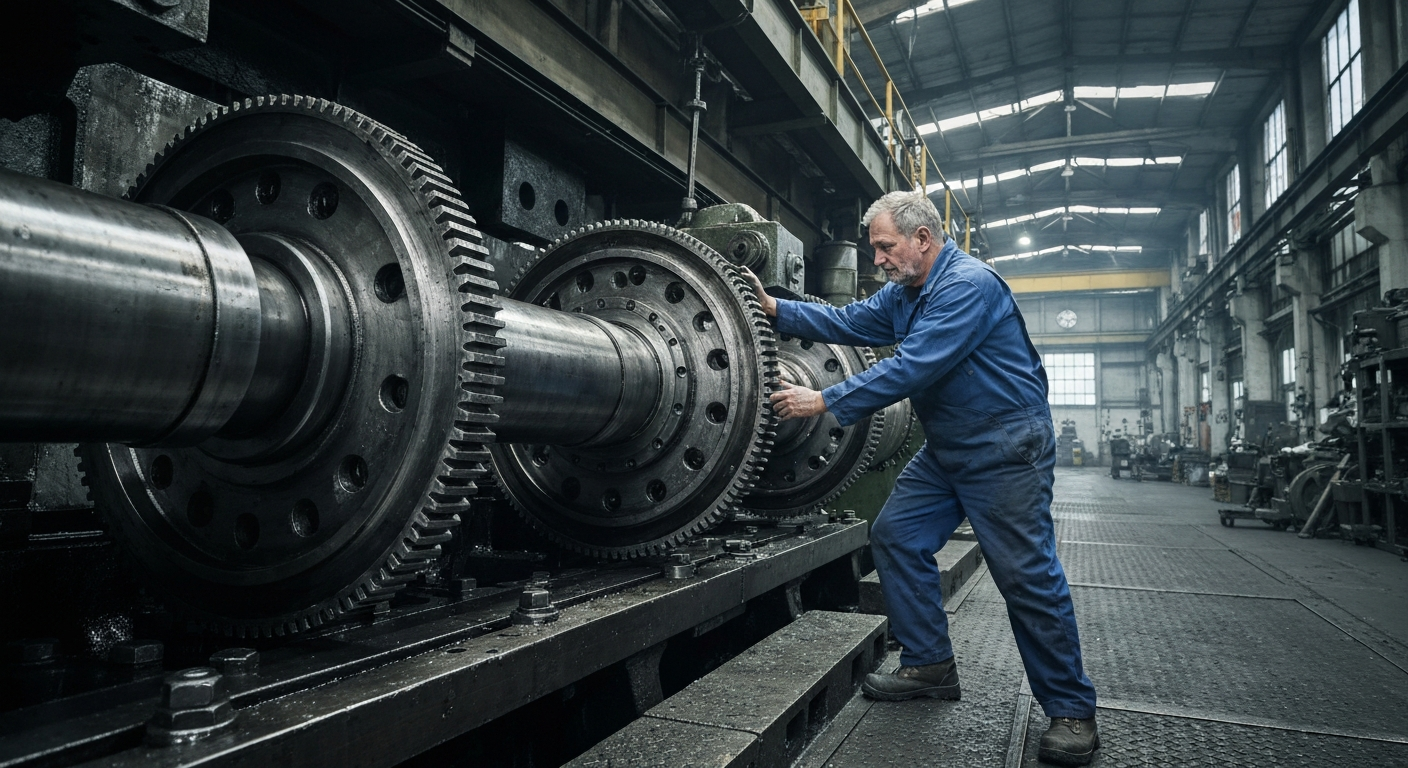
A millwright's workday is centered around the installation, maintenance, alignment, and repair of massive industrial machinery. Whether working in an automotive assembly plant, a power generation facility, or a food processing factory, millwrights are the mechanics of the industrial world. They read intricate blueprints and schematics to dismantle obsolete equipment, move heavy machinery using cranes and hoists, and carefully reassemble components with tolerances measured in thousandths of an inch.
The job requires a unique blend of heavy lifting and extreme precision. A typical shift might involve using laser alignment tools to ensure a turbine shaft is perfectly balanced, welding custom brackets for a conveyor system, or troubleshooting a sudden mechanical failure on a critical production line. It's a highly technical, hands-on career where mechanical aptitude and problem-solving skills are tested daily to keep facilities running smoothly.
The Career Ladder
1. Pre-apprentice / Helper
Starting out by assisting experienced millwrights, moving materials, cleaning work areas, and learning basic tool handling and safety protocols in industrial environments.
2. Apprentice
Typically a 4-year period combining paid on-the-job training (around 8,000 hours) with classroom instruction. This is often completed through a union apprenticeship program.
3. Journeyman / Licensed Tradesperson
A fully trained millwright capable of independent work. Note that millwrighting does not use a state-issued journeyman license; advancement relies on apprenticeship completion and specialized certifications.
4. Master
There is no formal state master tier in the millwright trade. Career progression is based on extensive experience, specialized equipment certifications, and reputation rather than a state credential.
5. Foreman / Lead
Supervising crews, interpreting complex blueprints and schematics, coordinating with plant management and other trades, and ensuring precision alignment and safety standards.
6. Project Manager / Superintendent / Own Business
Overseeing large-scale plant installations, managing maintenance contracts, bidding on projects, or running an independent contracting firm.
Want to know what each of these stages pays locally? Check the state tool instead of guessing.
How to Get Started
Research the specific industries in your area that employ millwrights, such as manufacturing, energy, or logistics.
Look into local union apprenticeship programs, particularly through the United Brotherhood of Carpenters and Joiners of America (UBC), which represents many millwrights.
If a union path isn't available, explore trade or technical school programs offering certificates or associate degrees in industrial maintenance or millwrighting.
Acquire basic mechanical hand tools and required safety gear for industrial environments.
Apply for apprenticeships or entry-level helper positions to begin accumulating on-the-job training hours.
Complete your apprenticeship (typically 4 years) alongside classroom instruction to reach journeyman status.
Continuously pursue specialized certifications for specific machinery or advanced alignment techniques to increase your value.
Find programs near you: Apprenticeship.gov or browse the Trade School Directory.
Union vs. Non-Union
Apprenticeship
Union:
Highly structured 4-year apprenticeship with standardized curriculum and scheduled pay bumps.
Non-Union:
Often relies on trade school completion followed by on-the-job training; progression can be less formalized.
Wages
Union:
Wages negotiated collectively, often resulting in higher hourly rates for journeymen.
Non-Union:
Wages negotiated individually based on experience, certifications, and the specific employer.
Benefits
Union:
Robust benefits packages usually including pension, annuity, and comprehensive family health insurance.
Non-Union:
Benefits vary widely by company; may include 401(k) matching and health insurance, but rarely pensions.
Job Placement
Union:
Union hall dispatches members to various contractors and job sites as projects demand.
Non-Union:
Direct employment with a single manufacturing facility or maintenance contractor; potentially more stable location.
Mobility
Union:
Mobility between union contractors is common, allowing for diverse project experience.
Non-Union:
Mobility requires applying for new jobs independently; advancement often tied to staying with one company.
| Factor | Union (e.g., UBC) | Non-Union (Open Shop) |
|---|---|---|
| Apprenticeship | Highly structured 4-year apprenticeship with standardized curriculum and scheduled pay bumps. | Often relies on trade school completion followed by on-the-job training; progression can be less formalized. |
| Wages | Wages negotiated collectively, often resulting in higher hourly rates for journeymen. | Wages negotiated individually based on experience, certifications, and the specific employer. |
| Benefits | Robust benefits packages usually including pension, annuity, and comprehensive family health insurance. | Benefits vary widely by company; may include 401(k) matching and health insurance, but rarely pensions. |
| Job Placement | Union hall dispatches members to various contractors and job sites as projects demand. | Direct employment with a single manufacturing facility or maintenance contractor; potentially more stable location. |
| Mobility | Mobility between union contractors is common, allowing for diverse project experience. | Mobility requires applying for new jobs independently; advancement often tied to staying with one company. |
Remember: Total compensation includes pension, health coverage, annuities, and union dues—not just the hourly wage. Compare full packages directly rather than assuming one is always better.
Tools & Safety Gear
Starter Toolkit
- Quality tape measure
- Combination square
- Set of combination wrenches (standard and metric)
- Socket set with ratchets
- Screwdriver set
- Ball peen hammer
- Pliers (slip-joint, locking, needle-nose)
- Allen wrenches (hex keys)
Required Safety Gear
- Steel-toed or composite-toed work boots
- Safety glasses (with side shields)
- Hard hat
- Hearing protection (earplugs or muffs)
- Heavy-duty work gloves
- High-visibility clothing or vest
- Fall protection harness (for elevated work)
Note: Gear links may be affiliate links, disclosure applies. We only recommend what we'd tell a real apprentice to buy. Check out the Tools & Gear hub, filtered for Millwrighting.
Training & Schools
Union apprenticeships provide the most direct, earn-while-you-learn pathway into millwrighting, offering structured curriculum and guaranteed job placement. For those unable to access a union program, technical schools offering certificates or associate degrees in industrial maintenance can provide the foundational skills needed to secure an entry-level non-union role.
Explore the Trade School Directory, filtered for Millwrighting and visit our Apprenticeships & Training hub.
Women in the Trades
While millwrighting has historically been male-dominated, organizations like the UBC are actively recruiting women through initiatives like the Sisters in the Brotherhood program. The trade values precision, problem-solving, and technical skill above raw strength, making it an excellent career path for detail-oriented individuals.
Learn more at our Women in the Trades hub.
Pros & Cons
Pros
- Exceptional job growth and high demand across multiple industries.
- Highly technical work that challenges your mechanical aptitude and problem-solving skills.
- Strong earning potential, especially with overtime and specialized certifications.
- Opportunities to travel for contract work or find stable employment at a single facility.
Cons
- Physically demanding work often involving heavy lifting and awkward positions.
- Working environments can be loud, dirty, and expose you to extreme temperatures.
- May require working irregular hours, night shifts, or being on-call for emergency repairs.
- High-pressure situations when critical machinery breaks down and halts production.
Safety Disclaimer
GetInTheTrades.com is an informational career resource. Millwright work can be dangerous and may require licensing, permits, code compliance, and supervised training. Do not attempt professional millwright work without proper instruction, safety equipment, and licensed supervision where required.
Sources
- Bureau of Labor Statistics, U.S. Department of Labor, Occupational Outlook Handbook, Industrial Machinery Mechanics, Machinery Maintenance Workers, and Millwrights. May 2024 data. Accessed July 5, 2026.
- Bureau of Labor Statistics, U.S. Department of Labor, Occupational Employment and Wage Statistics (OEWS) May 2025 release. Published May 15, 2026. Accessed July 5, 2026.
Ready to take the next step?
Stop researching and start building your career. Find programs and connect with local unions today.
Start Your Path →