Lineman
Build and maintain the high-voltage infrastructure that powers the grid, working at heights in all conditions.
Quick Facts
| Metric | Details |
|---|---|
| Median Annual Wage | $92,560* |
| Median Hourly Wage | $44.22* |
| Projected Growth (2024–2034) | 7%* |
| Projected Annual Openings | ~10,700/year* |
| Typical Entry Path | Pre-apprenticeship school followed by 3-4 year apprenticeship |
| Physical Demands | High (climbing, heavy lifting, extreme weather conditions) |
*Source: BLS Occupational Outlook Handbook ("Electrical Power-Line Installers and Repairers") and OEWS (accessed July 2026). Note: While this is the highest-median-wage trade covered here, the total workforce and annual openings are smaller than trades like inside-wire electricians. The high pay strongly reflects the hazard pay and extreme physical demands of high-voltage work.
Find Trade Info in Your State →Day in the Life
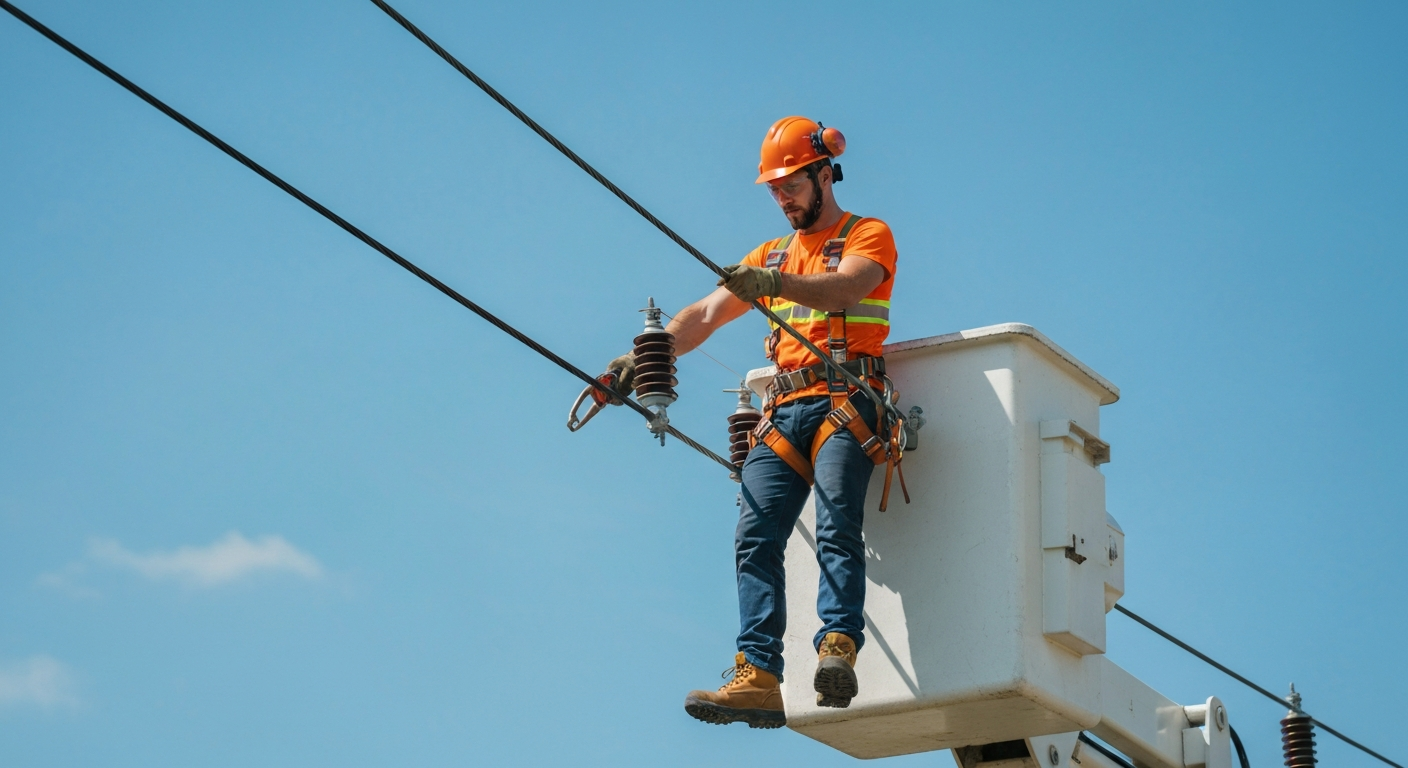
A lineman's day is rarely spent indoors. The job involves installing, maintaining, and repairing the high-voltage transmission and distribution lines that carry electricity from power plants to homes and businesses. You might spend the morning operating a bucket truck to replace a damaged transformer, or climbing wooden poles using gaffs (climbing spikes) when a truck can't access the site. The work requires intense focus, as you are often dealing with live, high-voltage lines where safety protocols are a matter of life and death.
Storm response is a major part of the job. When severe weather knocks out power, linemen are the first responders for the grid. This means working long, grueling hours in rain, snow, or high winds to restore electricity to communities. The physical demands are extreme—you are lifting heavy equipment, wearing heavy insulated gear, and working at heights—but the camaraderie among crews and the satisfaction of turning the lights back on for a town make it highly rewarding for those cut out for it.
The Career Ladder
Pre-apprentice / Helper (Groundman)
Entry-level role assisting crews from the ground, managing materials, and learning safety protocols. Often requires a CDL.
Apprentice Lineman
A 3-4 year period of rigorous on-the-job training and classroom instruction, completing structured step levels.
Journeyman Lineman
Achieved after completing the apprenticeship and required safety certifications. (Note: Lineman work does not use a state-issued electrical license board like inside wiremen do).
Master
There is no formal state master tier in line work. Advancement beyond journeyman is based on experience and leadership.
Foreman / Lead
Supervises a crew of linemen and groundmen, ensuring safety and coordinating the work plan.
Project Manager / Superintendent
Oversees large-scale transmission or distribution projects for utilities or major contractors.
How to Get Started
- Check requirements: You will generally need a high school diploma/GED and a clean driving record.
- Get your CDL: A Commercial Driver's License (Class A) is almost universally required to operate heavy bucket and digger derrick trucks.
- Consider a climbing school: Many successful applicants attend a pre-apprenticeship lineman school (often 10-15 weeks) to learn basic climbing, safety, and earn certifications.
- Apply for apprenticeships: Apply through the union (e.g., a regional NEAT or ALBAT program) or directly with utility companies and non-union contractors.
- Start as a groundman: You will likely start by assisting from the ground before moving up to an apprentice role.
- Complete the apprenticeship: Work 3-4 years progressing through apprentice steps to reach journeyman status.
Explore programs via Apprenticeship.gov and our Trade School Directory.
Union vs. Non-Union
Apprenticeship
Union:
Highly structured through regional JATC programs (e.g., SELCAT, NW-JATC). Standardized safety and climbing curriculum.
Non-Union:
Managed by individual power companies or private contractors. Quality is generally high due to the extreme safety requirements of the work.
Wages
Union:
Standardized, transparent pay scales negotiated by collective bargaining. Very strong overtime and storm pay rules.
Non-Union:
Negotiated individually or set by the utility company. Often highly competitive to match union rates.
Benefits
Union:
Top-tier health insurance and multiple retirement/pension funds paid by the employer.
Non-Union:
Usually strong (especially at major utilities), including 401(k) matches and health plans, though structure varies.
Job Placement
Union:
Dispatched through the union hall for contractor work, or hired directly by a unionized utility.
Non-Union:
Hired directly by the employer. Utility jobs offer high stability; contractor work depends on project volume.
Mobility
Union:
"Tramp" linemen can travel the country signing the books at different union halls for high-paying contractor or storm work.
Non-Union:
Tied to your specific employer or utility territory, though storm chasing is possible with some private contractors.
| Factor | Union (IBEW) | Non-Union / Utility Direct |
|---|---|---|
| Apprenticeship | Highly structured through regional JATC programs (e.g., SELCAT, NW-JATC). Standardized safety and climbing curriculum. | Managed by individual power companies or private contractors. Quality is generally high due to the extreme safety requirements of the work. |
| Wages | Standardized, transparent pay scales negotiated by collective bargaining. Very strong overtime and storm pay rules. | Negotiated individually or set by the utility company. Often highly competitive to match union rates. |
| Benefits | Top-tier health insurance and multiple retirement/pension funds paid by the employer. | Usually strong (especially at major utilities), including 401(k) matches and health plans, though structure varies. |
| Job Placement | Dispatched through the union hall for contractor work, or hired directly by a unionized utility. | Hired directly by the employer. Utility jobs offer high stability; contractor work depends on project volume. |
| Mobility | "Tramp" linemen can travel the country signing the books at different union halls for high-paying contractor or storm work. | Tied to your specific employer or utility territory, though storm chasing is possible with some private contractors. |
Total compensation includes pension, health, annuity, and dues, not just the hourly wage. Compare total packages directly rather than assuming one is always better.
Tools & Safety Gear
Starter Toolkit (Groundman)
- Lineman's pliers (9-inch)
- Heavy-duty adjustable wrench
- Folding rule or tape measure
- Skinning knife
- Sturdy gear bag
Required Safety Gear
- Steel or composite toe climbing boots (with pronounced heel and steel shank)
- Class E hard hat
- Safety glasses
- Flame-resistant (FR) clothing
- Heavy leather work gloves
Gear links may be affiliate links, disclosure applies, we only recommend what we'd tell a real apprentice to buy. See the Tools & Gear hub, filtered for Line Work.
Training & Schools
While you can theoretically enter an apprenticeship with no experience, line work is so competitive and dangerous that many applicants attend a pre-apprenticeship climbing school first (such as NLC, SLTC, or local community college programs). These schools take a few months and teach you how to safely climb poles, earn your CDL, and get CPR/OSHA certifications. Graduating from one of these schools does not make you a journeyman, but it often makes you a much stronger candidate to be selected for a formal apprenticeship.
Check the Trade School Directory, filtered for Line Work and the Apprenticeships & Training hub.
Women in the Trades
Line work has very low female representation, largely due to the extreme physical demands and historical barriers. However, women who can handle the climbing, heavy lifting, and demanding conditions are entering the trade and finding success. The pay scale is strictly role-based, meaning women earn the exact same high wages as their male counterparts on a union crew.
Connect with resources in the Women in the Trades hub.
Pros & Cons
Pros
- Exceptionally high earning potential, especially with storm and overtime pay
- Strong brotherhood and crew camaraderie
- Working outdoors and rarely being stuck in one location
- Excellent benefits and retirement packages
Cons
- High risk of severe injury or death from high voltage or falls
- Grueling physical toll on the body (shoulders, knees, back)
- Requires working in extreme weather conditions
- Storm work can mean being away from family for weeks at a time
Related Trades
Consider exploring these related fields: Electrician, Solar Installer, Wind Turbine Technician, Ironworker/Structural Steel Worker, or Heavy Equipment Operator.
Safety Disclaimer
GetInTheTrades.com is an informational career resource. Lineman work can be dangerous and may require licensing, permits, code compliance, and supervised training. Do not attempt professional lineman work without proper instruction, safety equipment, and licensed supervision where required.
Sources
- Bureau of Labor Statistics, U.S. Department of Labor, Occupational Outlook Handbook, Electrical Power-Line Installers and Repairers. Median annual wage and projected growth (2024–2034). May 2024 data, accessed July 5, 2026.
- Bureau of Labor Statistics, U.S. Department of Labor, Occupational Employment and Wage Statistics (OEWS). Median hourly and mean annual wage. May 2025 release, published May 15, 2026.