Pipefitter
Install, assemble, fabricate, and maintain the high-pressure piping systems that power industrial plants, refineries, and commercial buildings.
Quick Facts
| Median Annual Wage | $62,970 (National) / $72,170 (Mean)* |
|---|---|
| Median Hourly Wage | $34.70* |
| Projected Growth | 4% (2024–2034) |
| Annual Openings | ~44,000/year |
| Typical Entry Path | Apprenticeship (5 years) |
| Physical Demands | High: heavy lifting, tight spaces, working at heights |
*Source: BLS Occupational Outlook Handbook (May 2024 data) and OEWS (May 2025 release). Accessed July 5, 2026. Note: The BLS reports pipefitters together with plumbers and steamfitters under one wage category, so these are the best available national figures for the combined trade.
Find Trade Info in Your State →National averages don't tell the whole story. Use our state tool to see what pipefitters actually make in your area.
Day in the Life
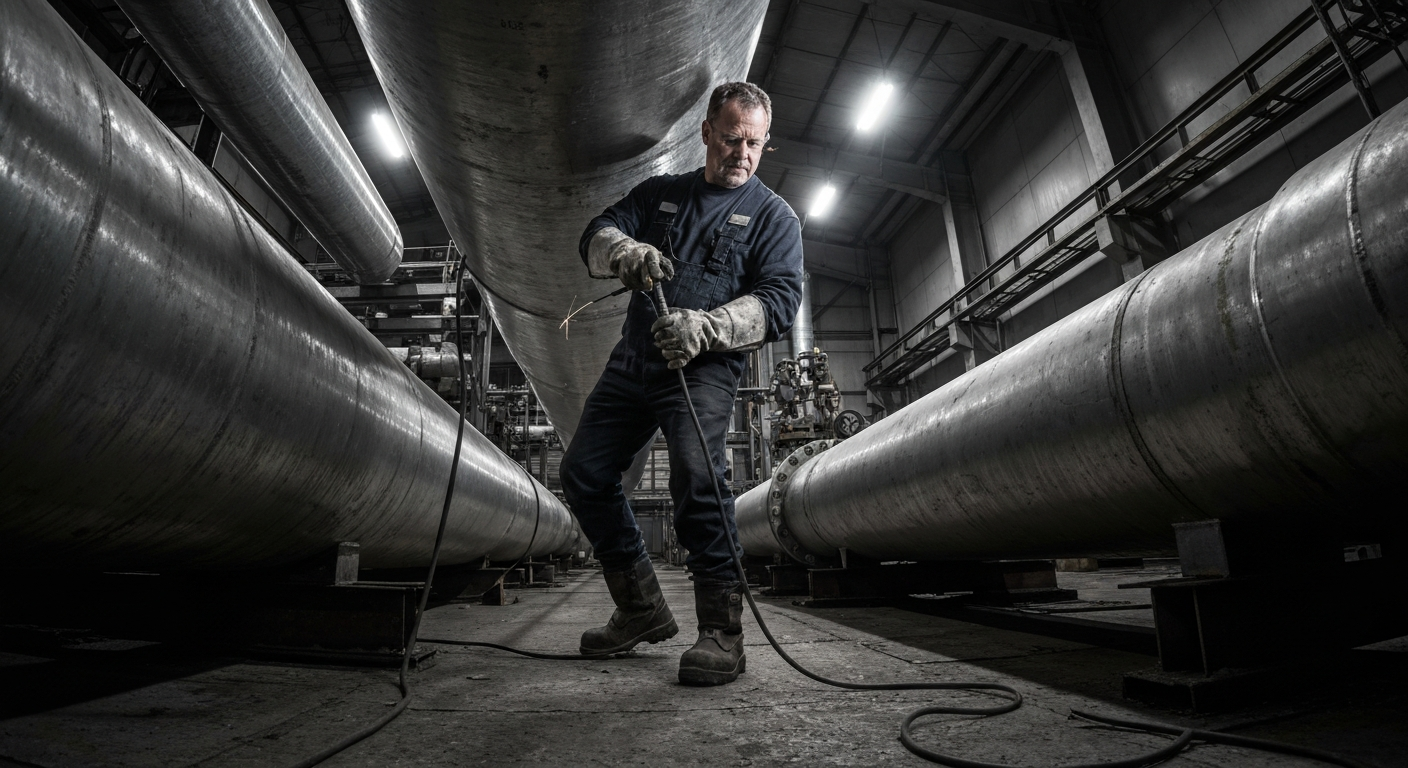
A pipefitter's day is focused heavily on industrial and commercial environments—think power plants, oil refineries, large manufacturing facilities, and high-rise mechanical systems. Unlike residential plumbers who deal mainly with water and waste systems in homes, pipefitters work with high-pressure systems carrying steam, chemicals, gases, and industrial fluids. The work involves reading complex blueprints, cutting, threading, and welding heavy-duty metal pipes, and ensuring every joint can withstand intense pressure and extreme temperatures.
The environment is often loud, physically demanding, and requires high precision. A typical day might involve rigging large pipe sections into place using cranes, operating specialized welding equipment to join high-alloy steel pipes, or conducting rigorous pressure tests to verify system integrity before a plant goes online. Safety is paramount, and the work demands a deep understanding of metallurgy, physics, and strict industrial codes.
The Career Ladder
1. Pre-apprentice / Helper
Starting out by moving materials, cleaning the site, assisting journeymen, and learning basic tool safety and site operations in industrial or commercial settings.
2. Apprentice
Typically a 5-year period combining paid on-the-job training with classroom instruction, most commonly through a UA (United Association) apprenticeship program.
3. Journeyman / Licensed Tradesperson
Fully trained and capable of working independently. Journeyman licensing exists in most states, and welding certifications (e.g., AWS) are frequently required for pressure-piping work.
4. Master
A Master tier exists in some states or jurisdictions but is not universal. Advancement often depends on specialized certifications and experience rather than a blanket state master license.
5. Foreman / Lead
Running a crew, reading complex blueprints, coordinating with other trades, and ensuring the project stays on schedule and up to code.
6. Project Manager / Superintendent / Own Business
Managing entire construction sites, estimating jobs, bidding on contracts, or running your own contracting company.
Want to know what each of these stages pays locally? Check the state tool instead of guessing.
How to Get Started
Research local requirements for pipefitting and welding certifications in your state or target industry.
Apply for a union apprenticeship through the United Association (UA), which is the most common and structured path into the trade.
If an apprenticeship isn't immediately available, consider enrolling in a trade school program focusing on pipefitting or welding to gain foundational skills.
Invest in essential safety gear and a basic starter toolkit for your first day on the job.
Complete your apprenticeship hours, combining rigorous on-the-job training with classroom instruction.
Earn your journeyman license and any specialized welding certifications required for high-pressure systems.
Build a reputation for precision and safety to advance into foreman or specialized roles.
Union vs. Non-Union
| Factor | Union (e.g., UA) | Non-Union (Private Contractors) |
|---|---|---|
| Apprenticeship | Highly structured 5-year program, clear pay progression, earn while you learn. | Less formal, though some large contractors have structured programs. Training depends on the employer. |
| Wages | Set by collective bargaining agreement. Highly standardized. | Negotiated individually based on experience and certifications. |
| Benefits | Comprehensive pension, family healthcare, and annuity. | Varies widely. Larger industrial contractors typically offer 401(k) and health insurance. |
| Job Placement | Dispatched to jobs through the union hall. | You must find, apply, and interview for your own jobs. |
| Mobility | Can travel as a "boomer" to other locals for major industrial projects. | Can work anywhere, but must prove skills to each new employer. |
Apprenticeship
Wages
Benefits
Job Placement
Mobility
Note: Total compensation includes pension, healthcare, annuity, and union dues—not just the hourly wage. Always compare the full package directly.
Tools & Safety Gear
Starter Toolkit
- 25-foot or 35-foot tape measure
- Torpedo level
- Channel locks and adjustable wrenches
- Pipe wrenches (various sizes)
- Wrap-around pipe marker
- Striker (for welding setup)
Required Safety Gear
- Hard hat
- Safety glasses (with side shields)
- Steel-toe boots
- Heavy-duty leather work gloves
- Hearing protection
- Welding hood and jacket (if welding)
Gear links may be affiliate links (disclosure applies). We only recommend what we'd tell a real apprentice to buy. See the Tools & Gear hub, filtered for Pipefitting.
Training & Schools
A formal apprenticeship, particularly through the UA, is the gold standard for entering the pipefitting trade, offering comprehensive classroom and on-the-job training. Trade and technical schools can be a valuable alternative or stepping stone, especially for learning foundational welding skills, which are critical in industrial pipefitting.
Search the Trade School Directory (filtered for Pipefitting) or explore the Apprenticeships & Training hub.
Women in the Trades
Women are increasingly finding strong careers in pipefitting, drawn by the high pay, excellent union benefits, and the technical challenge of the work. The UA and various tradeswomen organizations actively support women entering industrial piping, offering mentorship and networking opportunities to ensure success on the job site.
Learn more at the Women in the Trades hub.
Pros & Cons
Pros
- • Excellent pay and benefits, especially in unionized commercial/industrial sectors
- • Highly technical work that demands and rewards precision
- • Opportunities to travel for major industrial projects (booming)
- • Strong job security due to constant need for infrastructure maintenance
Cons
- • Work environments can be loud, dirty, and expose you to extreme temperatures
- • Very physically demanding, involving heavy lifting and awkward positions
- • Strict safety protocols required due to high-pressure and hazardous materials
- • Can require significant travel depending on local industrial demand
Safety Disclaimer
GetInTheTrades.com is an informational career resource. Pipefitting work can be dangerous and may require licensing, permits, code compliance, and supervised training. Do not attempt professional pipefitting work without proper instruction, safety equipment, and licensed supervision where required.
Sources
- • Bureau of Labor Statistics, U.S. Department of Labor, Occupational Outlook Handbook, Plumbers, Pipefitters, and Steamfitters. May 2024 data. Accessed July 5, 2026.
- • Bureau of Labor Statistics, U.S. Department of Labor, Occupational Employment and Wage Statistics (OEWS) May 2025 release. Published May 15, 2026.
Ready to start building?
Take the next step toward a career in pipefitting. Find programs, compare pay, and learn how to get started.
Start Your Path