Boilermaker
Build, maintain, and repair the massive pressure vessels and tanks that power heavy industry.
Quick Facts
| Metric | Details |
|---|---|
| Median Annual Wage | $73,340* |
| Median Hourly Wage | See state tool |
| Projected Growth (2024–2034) | -2% (Declining overall)* |
| Projected Annual Openings | ~800/year* |
| Typical Entry Path | 4-year union apprenticeship |
| Physical Demands | Very High (heavy lifting, confined spaces, extreme heat) |
*Source: BLS Occupational Outlook Handbook ("Boilermakers", accessed July 2026). Note: While this occupation is projected to decline slightly overall (-2%), the median wage is among the highest of the trades covered here. The ~800 annual openings come almost entirely from the need to replace retiring workers, meaning real hiring demand exists even if the field isn't expanding.
Find Trade Info in Your State →Day in the Life
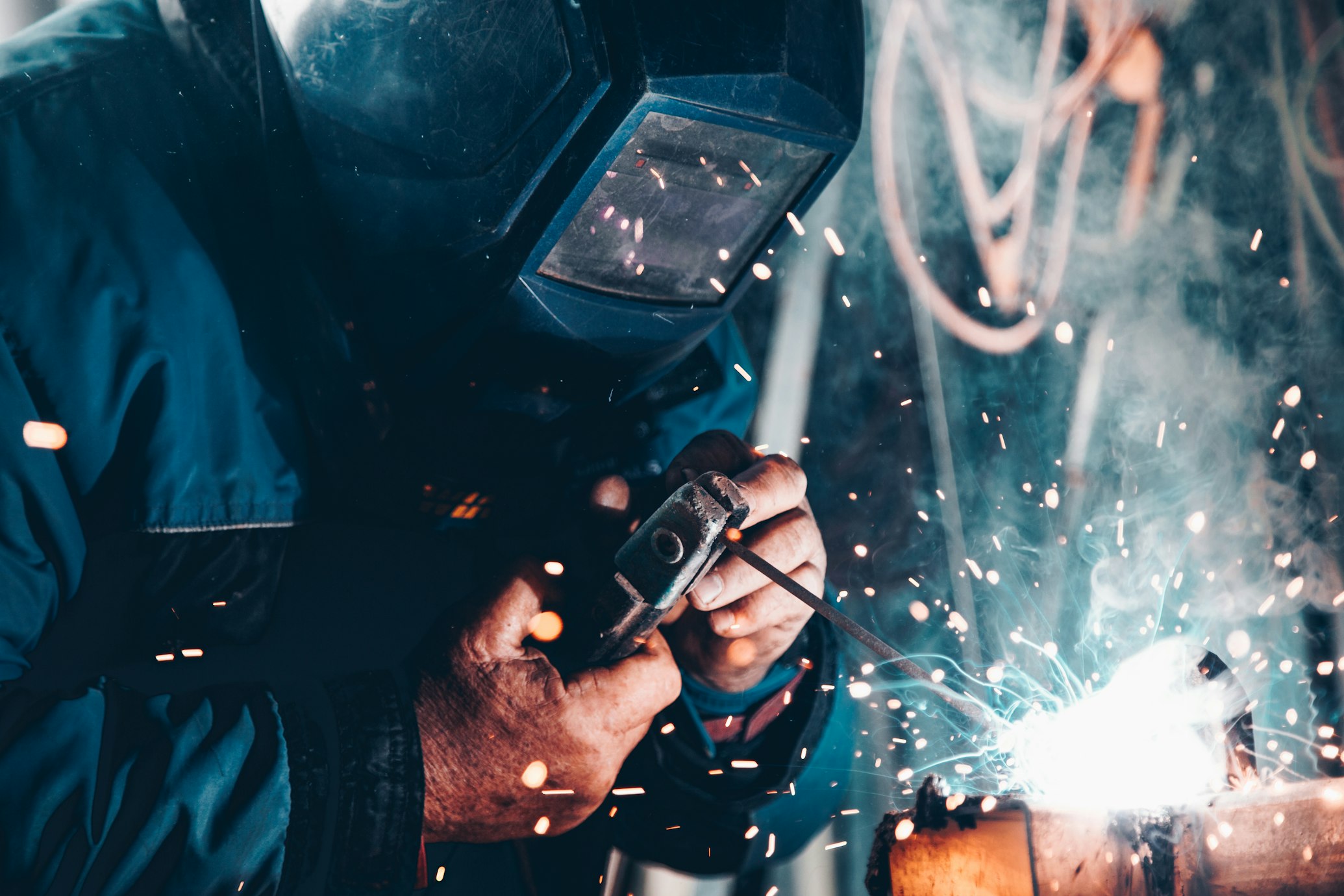
A boilermaker's day is defined by heavy metal, intense heat, and tight spaces. You will spend your shifts fabricating, assembling, installing, and maintaining massive boilers, pressure vessels, and vats. These are the critical systems that power refineries, chemical plants, power generation facilities, and large industrial complexes. The work heavily involves reading blueprints, cutting thick steel plates, rigging multi-ton components into place, and performing high-precision, structural welding.
The environment is uniquely demanding. Boilermakers frequently work inside the very tanks and boilers they are repairing—often requiring confined space entry gear, respirators, and heavy protective leathers. It is loud, dirty, and physically grueling work that requires you to operate heavy grinders, torches, and welding equipment in awkward positions for hours at a time. Because industrial plants often shut down for limited windows to allow for maintenance (called "outages" or "turnarounds"), the work can involve intense weeks of heavy overtime followed by periods of downtime.
The Career Ladder
Pre-apprentice / Helper
Entry-level role focused on safety training, fire-watching for welders, gathering materials, and assisting journeymen with rigging and prep work.
Apprentice
Typically a 4-year structured program combining extensive on-the-job training with classroom instruction, learning metallurgy, blueprint reading, and advanced welding techniques.
Journeyman / Boilermaker
A fully qualified tradesperson capable of independent fabrication, rigging, and certified welding. Advancement relies on experience and specialty certifications rather than a state licensing board.
Master
There is no formal state master tier in boilermaking. Progression at this stage means becoming a highly specialized welder (e.g., tube welding) or taking on leadership roles.
Foreman / Lead
Manages crews of boilermakers on-site, oversees complex rigging operations, ensures strict safety compliance, and coordinates with plant management.
Project Manager / Superintendent
Oversees entire industrial turnaround projects, managing massive budgets, schedules, and multiple contractor disciplines.
Check the state tool for stage-by-stage local pay expectations.
How to Get Started
Meet the baselines
You need a high school diploma or GED, a valid driver's license, and the ability to pass a drug screen and physical aptitude test.
Locate your local union
Boilermaking is heavily unionized. Search for the International Brotherhood of Boilermakers local chapter in your region to find their specific application windows.
Apply for the apprenticeship
Submit your application. You will likely need to take an aptitude test covering basic math, reading comprehension, and spatial reasoning.
Interview and rank
If you pass the test, you'll interview with the apprenticeship committee. Your combined score determines your place on the hiring list.
Complete the 4-year program
Work full-time earning a climbing percentage of journeyman wages while attending classroom instruction (often in multi-week blocks).
Earn certifications
Throughout your apprenticeship and beyond, earn specialized welding, OSHA, and rigging certifications to maximize your employability.
Check Apprenticeship.gov or our Trade School Directory to explore local programs.
Union vs. Non-Union
Boilermaking is one of the most heavily unionized trades in the construction and industrial sectors. While non-union work exists (often under different titles like "industrial mechanic" or "heavy fabricator"), the vast majority of large-scale boiler, refinery, and power plant work is organized through the International Brotherhood of Boilermakers.
Union (Boilermakers)
- Highly structured 4-year apprenticeship
- Standardized, transparent wage scales
- Robust pension and health benefits
- Dispatched to jobs via the union hall
Non-Union / Open Shop
- Training structure depends entirely on the employer
- Wages negotiated individually based on experience
- Benefits vary widely by company (often 401k rather than pension)
- Must find and apply for your own jobs
| Union (Boilermakers) | Non-Union / Open Shop |
|---|---|
|
|
Remember: Total compensation includes your pension, healthcare, annuity, and dues—not just the hourly wage on your check. Compare the full package directly.
Tools & Safety Gear
Starter Toolkit
- • Heavy-duty tape measure
- • Torpedo level
- • Adjustable wrenches (spuds)
- • Striker (for torches)
- • Chipping hammer and wire brush
- • Soapstone and markers
Required Safety Gear
- • High-quality welding hood
- • Heavy leather welding jacket/sleeves
- • Steel-toe metatarsal boots
- • Respirator (half-mask)
- • Heavy duty welding and work gloves
- • Hard hat and safety glasses
Note: Gear links may be affiliate links. Disclosure applies. We only recommend what we'd tell a real apprentice to buy. Check out our Tools & Gear hub for specific recommendations.
Training & Schools
Because boilermaking is heavily unionized, the standard path is a formal registered apprenticeship rather than starting at a private trade school. However, completing a welding program at a technical college beforehand can make you a much more competitive applicant for the union apprenticeship, as welding is a core component of the trade.
Explore programs in our Trade School Directory or learn more about the earn-while-you-learn model in our Apprenticeships & Training hub.
Women in the Trades
Women are significantly underrepresented in boilermaking, but the industry and unions are actively working to recruit more women into the trade. The physical demands are high, but technique, precision welding skills, and safety awareness are what truly define a successful boilermaker.
Pre-apprenticeship programs and support networks are crucial for navigating the industry. Learn more in our Women in the Trades hub.
Pros & Cons
Pros
- • High median wage compared to many other trades
- • Strong union representation and benefits
- • Opportunity to work on massive, critical infrastructure
- • "Turnaround" schedules can allow for significant time off between intense work periods
Cons
- • Declining overall employment (-2% projected growth)
- • Extremely physically demanding (heavy lifting, extreme heat)
- • Frequent work in dark, tight, confined spaces
- • Often requires extensive travel to remote industrial sites
Related Trades
If boilermaking interests you, also consider: Welder, Millwright, Ironworker, Pipefitter, or Sheet Metal Worker.
Safety Disclaimer
GetInTheTrades.com is an informational career resource. Boilermaker work can be dangerous and may require licensing, permits, code compliance, and supervised training. Do not attempt professional boilermaker work without proper instruction, safety equipment, and licensed supervision where required.
Sources
- Bureau of Labor Statistics, U.S. Department of Labor, Occupational Outlook Handbook, Boilermakers, May 2024 data (accessed July 11, 2026).
Ready to start?
Explore apprenticeships, check local pay rates, or see what gear you need for day one.
Start Your Path →