
Fire Sprinkler Fitter
Install and maintain the life-saving fire suppression systems that protect buildings and people.
Quick Facts
| Metric | Details |
|---|---|
| Median Annual Wage | $62,970* |
| Median Hourly Wage | $34.70* |
| Projected Growth (2024–2034) | 4%* |
| Projected Annual Openings | ~44,000/year* |
| Typical Entry Path | 4-5 year apprenticeship |
| Physical Demands | High (heavy lifting, overhead work, climbing) |
*Source: BLS Occupational Outlook Handbook and OEWS May 2025 release (accessed July 2026). Note: BLS tracks fire sprinkler fitters together with plumbers, pipefitters, and steamfitters under one combined wage and growth category, so these are the best available national figures for the combined trade. However, demand for this specific specialization is heavily supported by building codes in all states requiring fire suppression systems.
Find Trade Info in Your State →Day in the Life
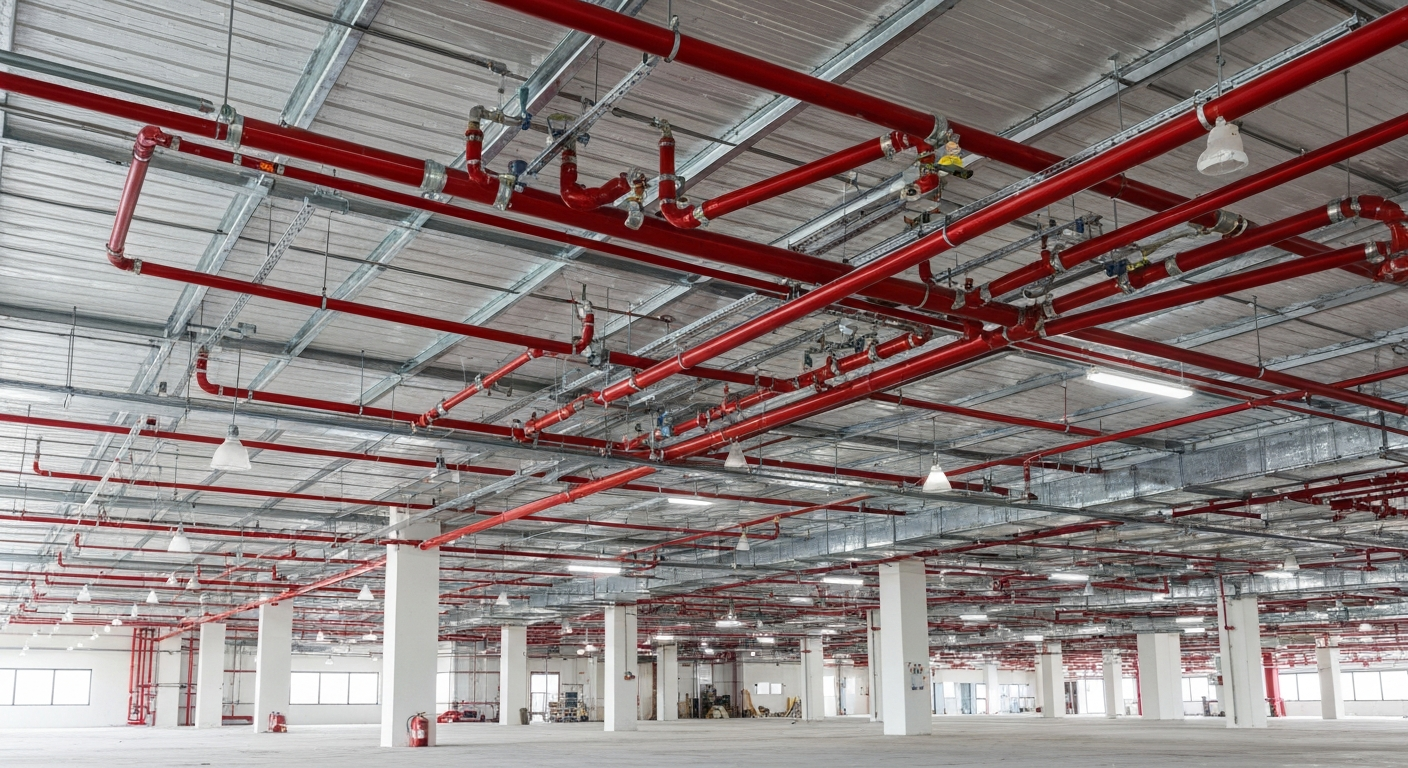
A fire sprinkler fitter spends their day installing, inspecting, repairing, and maintaining fire suppression sprinkler systems in commercial, industrial, and residential buildings. You will work extensively from fire protection blueprints to measure, cut, thread, and assemble iron, steel, or plastic pipes. The work often requires operating threading machines, groovers, and heavy wrenches, frequently while working overhead from ladders or aerial lifts.
Beyond the physical installation, a significant part of the job involves ensuring strict code compliance. You will conduct pressure tests on newly installed systems, verify water flow rates, and work alongside local fire marshals to pass rigorous life-safety inspections. It is precision pipefitting with zero room for error, because the systems you build must work flawlessly in an emergency.
The Career Ladder
Pre-apprentice / Helper
Entry-level role focused on material handling, organizing fittings, measuring pipe, and assisting journeymen while learning basic jobsite safety.
Apprentice
A formal 4-5 year program combining paid on-the-job training with classroom instruction in pipe fabrication, hydraulics, and fire codes.
Journeyman / Licensed Fitter
A fully trained sprinkler fitter capable of independent installation. State licensing requirements vary widely; many states require specific fire suppression credentials or NICET certification.
Master
Some states offer a Master Sprinkler Fitter or Fire Protection Contractor license tier, allowing you to pull permits and run a business, though this is not universal across all states.
Foreman / Lead
Manages installation crews on large construction projects, coordinates with other trades, and ensures all work meets fire marshal standards.
Project Manager / Superintendent / own business
Oversees entire fire protection divisions, handles estimating and logistics, or transitions into owning a fire suppression contracting company.
To see how pay scales up through these stages in your area, see the state tool.
How to Get Started
Check state requirements
Look up your state's specific licensing rules for fire sprinkler fitters, as life-safety codes often dictate strict training pathways.
Meet the baseline
You will need a high school diploma or GED, a valid driver's license, and the ability to pass a drug screen and basic math aptitude test.
Research local apprenticeships
Use Apprenticeship.gov to find registered sprinkler fitter programs in your area, particularly through the UA.
Apply and test
Submit applications to local union halls or non-union contractors. Expect an aptitude test covering basic math and mechanical reasoning, followed by an interview.
Enter training
Begin your 4-5 year apprenticeship, working full-time in the field while attending classes in the evenings or on designated training weeks.
Complete apprenticeship and license
Log your required on-the-job hours, pass your final exams, and earn your journeyman status and any required state or NICET certifications.
Union vs. Non-Union
Apprenticeship
Wages
Benefits
Job Placement
Mobility
| Feature | Union (UA) | Non-Union (Open Shop) |
|---|---|---|
| Apprenticeship | Highly structured 5-year program; tuition usually covered by the union. | Varies by employer; may be less formal or require paying for trade school. |
| Wages | Standardized scale based on experience level; collectively bargained. | Negotiated individually; often lower starting base but can grow with experience. |
| Benefits | Comprehensive health insurance and pension plans included. | Depends entirely on the employer; typically standard 401(k) and health plans. |
| Job Placement | Dispatched to contractors through the union hall. | You apply directly to contractors and find your own work. |
| Mobility | Can travel to other union locals for work (traveling journeyman). | Tied to your specific employer or local job market. |
Remember that total compensation includes pension, health coverage, annuity, and dues, not just the hourly wage. Compare the full package directly rather than assuming one side is always better.
Tools & Safety Gear
Starter Toolkit
- • 25-foot tape measure
- • Torpedo level
- • Channel locks (multiple sizes)
- • Pipe wrenches (14" and 18")
- • Crescent wrenches
- • Utility knife
- • Allen wrench set
- • Sturdy tool bag
Required Safety Gear
- • ANSI-rated safety glasses
- • Hard hat
- • Steel or composite toe work boots
- • Heavy-duty work gloves
- • High-visibility vest or shirt
- • Hearing protection
Gear links may be affiliate links, disclosure applies, we only recommend what we'd tell a real apprentice to buy. Check out the Tools & Gear hub, filtered for Fire Sprinkler Fitting.
Training & Schools
The most reliable path into fire sprinkler fitting is a formal apprenticeship, typically through the United Association (UA) or a registered non-union program, which provides paid on-the-job training alongside classroom instruction. While some trade and technical schools offer pipefitting or fire protection courses that can help you get hired, completing a full apprenticeship is generally required to reach journeyman status. Additionally, earning NICET (National Institute for Certification in Engineering Technologies) certification in Water-Based Systems Layout or Inspection and Testing is a highly recognized credential that can boost your career.
Explore the Trade School Directory, filtered for Fire Sprinkler Fitting, and learn more at the Apprenticeships & Training hub.
Women in the Trades
While women currently make up a small percentage of the pipe trades (typically under 3%), representation is slowly growing as more structured apprenticeship programs actively recruit female candidates. Organizations like the UA have initiatives to support women entering the trade, and the strict adherence to safety and code compliance in sprinkler fitting makes it a field where technical precision is valued above all else.
Find support networks and resources at the Women in the Trades hub.
Pros & Cons
Pros
- • Consistent demand driven by strict building codes and life-safety regulations.
- • High earning potential, especially in unionized urban areas.
- • Meaningful work—you are installing systems that actively save lives and property.
- • Less exposure to sanitary waste compared to general plumbing.
Cons
- • Very physically demanding, requiring heavy lifting and constant overhead work.
- • High-pressure work environments; failing an inspection delays the entire building project.
- • Frequent work at heights on ladders, scaffolding, or lifts.
- • Can involve dirty, wet conditions when testing or draining old systems.
Related Trades
Plumber • Pipefitter • HVAC/R Technician • Welder • Millwright
Safety Disclaimer
GetInTheTrades.com is an informational career resource. Fire sprinkler fitting work can be dangerous and may require licensing, permits, code compliance, and supervised training. Do not attempt professional fire sprinkler fitting work without proper instruction, safety equipment, and licensed supervision where required.
Sources
- • Bureau of Labor Statistics, U.S. Department of Labor, Occupational Outlook Handbook, Plumbers, Pipefitters, and Steamfitters, May 2024 data (accessed July 11, 2026).
- • Bureau of Labor Statistics, U.S. Department of Labor, Occupational Employment and Wage Statistics (OEWS), Plumbers, Pipefitters, and Steamfitters, May 2025 release (published May 15, 2026).
Ready to take the next step?
Find out what sprinkler fitters make in your area and how to get started.
Start Your Path →